

Behavioral Cartography for Puppies
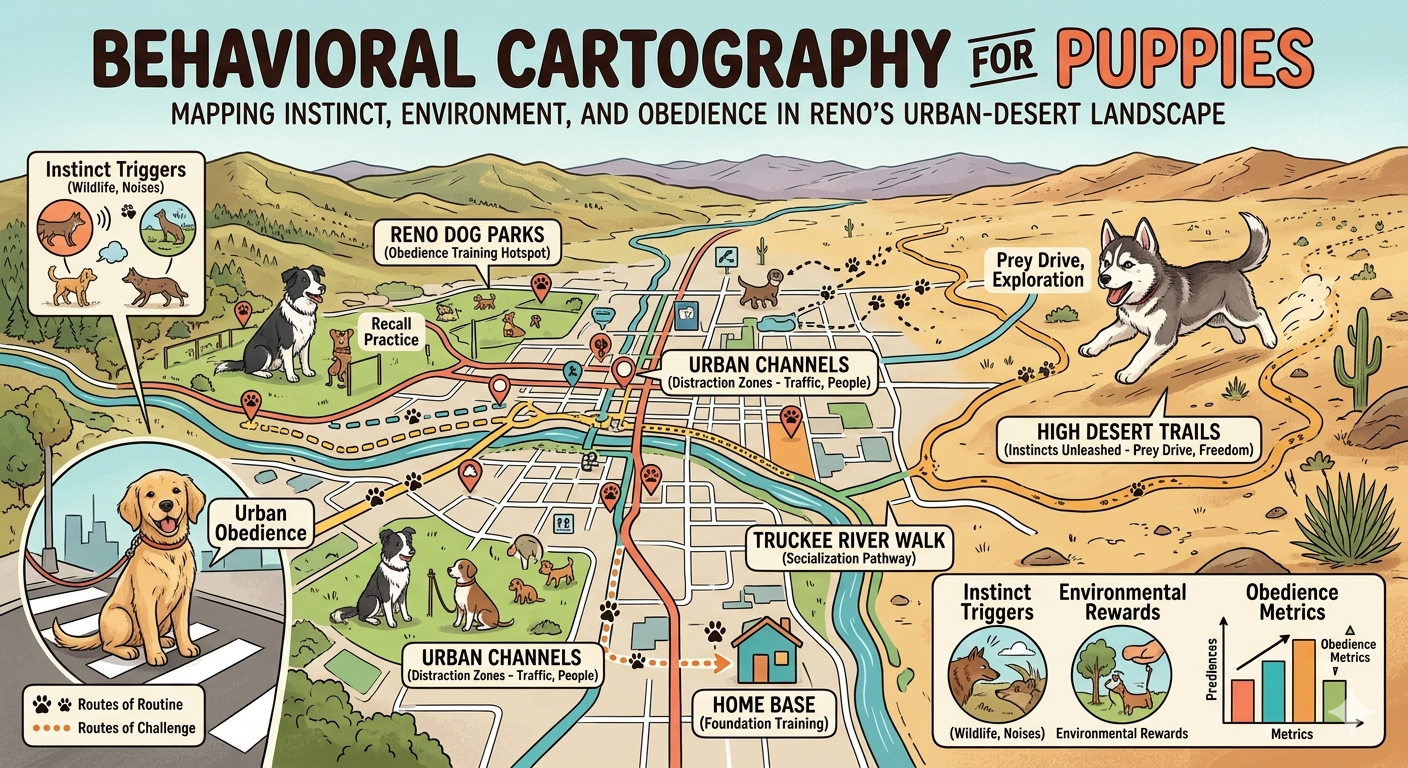
Behavioral Cartography for Puppies: Mapping Instinct, Environment, and Obedience in Reno’s Urban-Desert Landscape
At Hazard K9, we approach dog training in Reno through a lens that goes far beyond basic obedience. We do not simply teach commands. We decode behavior in relation to geography, climate, and lifestyle. Reno presents a highly specific training environment where urban density meets open desert, where stimuli shift rapidly, and where young dogs must learn to adapt with precision. Our methodology focuses on what we call behavioral cartography. This is the process of mapping a puppy’s instincts against the environments they navigate every day.
Why Reno Creates a Unique Training Challenge
Reno is not a uniform training ground. A puppy here is exposed to dramatically different sensory inputs within short distances. One moment they are walking through a quiet suburban neighborhood, and the next they are encountering high traffic zones, hiking trails, or open desert terrain.
This variability creates three core challenges:
• Inconsistent stimulus exposure
• Rapid environmental transitions
• Elevated instinct activation in outdoor settings
Traditional training models often fail because they rely on controlled environments. We design training programs that account for real world unpredictability. Our goal is not just obedience in ideal conditions but reliability across shifting contexts.
The Science of Behavioral Mapping
We begin every puppy training program by identifying behavioral patterns rather than isolated issues. Instead of labeling a puppy as stubborn or distracted, we analyze:
• Trigger points across locations
• Energy fluctuations throughout the day
• Response latency to commands in different environments
By mapping these variables, we build a behavioral profile unique to each dog. This allows us to create training pathways that are adaptive rather than rigid.
For example, a puppy that responds well indoors but struggles outdoors is not disobedient. It is experiencing a hierarchy shift where environmental stimuli outweigh handler engagement. We recalibrate that hierarchy through structured exposure and reinforcement timing.
Environmental Layering as a Training Strategy
One of the most effective techniques we use at Hazard K9 is environmental layering. This involves gradually increasing the complexity of training environments while maintaining command consistency.
We structure this in phases:
1. Controlled indoor conditioning
2. Low distraction outdoor exposure
3. Moderate stimulus environments such as parks
4. High distraction zones including busy streets or trails
Each phase is not time based but performance based. We move forward only when the puppy demonstrates consistent compliance under the current conditions.
This prevents what many owners experience in Reno, where a dog appears fully trained at home but becomes unresponsive outside.
Instinct Redirection in Open Terrain
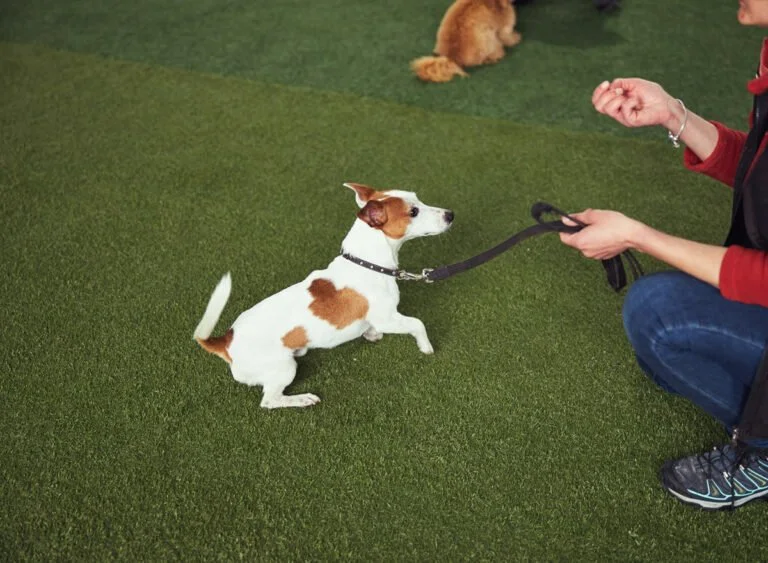
Reno’s proximity to desert and mountainous terrain introduces instinct driven behaviors that cannot be ignored. Puppies naturally shift into exploration, tracking, and prey drive modes in these environments.
Rather than suppressing these instincts, we redirect them.
We teach structured exploration where the puppy is allowed to engage with the environment but within defined boundaries. This includes:
• Controlled recall under distraction
• Directional movement commands
• Focus recovery after stimulus engagement
This approach preserves the dog’s natural drives while maintaining handler authority.
Timing and Precision in Reinforcement
In a dynamic environment like Reno, timing becomes critical. A delay of even a second in reinforcement can lead to confusion, especially when multiple stimuli are competing for the puppy’s attention.
We train owners as much as we train dogs. Precision in:
• Command delivery
• Reward timing
• Correction consistency
ensures that the puppy builds clear associations. Without this precision, training becomes inconsistent and unreliable.
Social Flow Conditioning
Another overlooked factor in dog training is social flow. Reno offers a wide range of human and dog interactions, from quiet walks to crowded public spaces.
We condition puppies to:
• Maintain composure in fluctuating social environments
• Differentiate between neutral and engaging stimuli
• Respond to handler cues regardless of surrounding activity
This prevents overexcitement, anxiety, and reactive behaviors as the puppy matures.
Building Long Term Behavioral Stability
Our focus at Hazard K9 is not short term results. We build behavioral stability that lasts as the dog grows.
This involves:
• Reinforcing decision making rather than rote commands
• Developing impulse control in varied environments
• Establishing a consistent communication system between dog and owner
A well trained dog is not one that simply follows commands. It is one that understands expectations across all situations.
Why Our Approach Works in Reno
Most training systems are designed for predictable environments. Reno is anything but predictable. Our behavioral cartography model ensures that training is:
• Environment specific
• Instinct aware
• Performance driven
We do not generalize training. We customize it based on how your puppy interacts with the world around them.
Choosing the best dog training in Reno is not about finding someone who can teach sit and stay. It is about working with a team that understands how environment, instinct, and behavior intersect.
At Hazard K9, we bring structure to chaos. We transform unpredictable environments into controlled learning opportunities. And most importantly, we build dogs that are confident, responsive, and reliable wherever they go.
If you are raising a puppy in Reno, the question is not whether you need training. It is whether your training approach is built for the environment your dog actually lives in.
