

Dog Training Schools in Reno
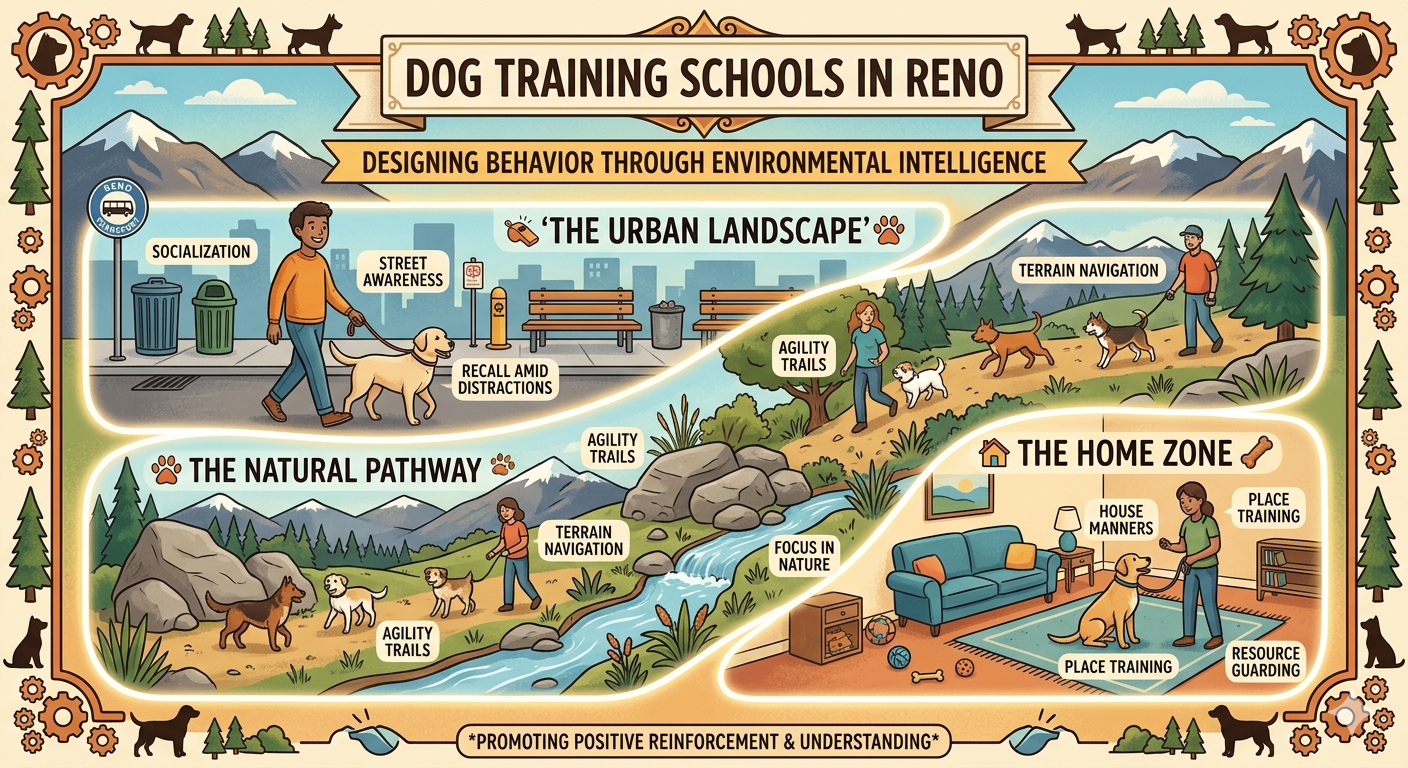
Dog Training Schools in Reno: Designing Behavior Through Environmental Intelligence
In Reno, dog training is evolving beyond basic obedience and into a more nuanced discipline that blends behavioral science, environmental awareness, and adaptive learning systems. At Hazard K9, we approach dog training schools in Reno not as static classrooms, but as dynamic ecosystems where dogs learn how to interpret, respond to, and thrive within the real world.
Rethinking the Concept of a Dog Training School
Traditional dog training schools often rely on repetition and command reinforcement in controlled environments. While this has value, it does not fully prepare dogs for the unpredictability of everyday life. Urban noise, shifting human behavior, unfamiliar animals, and environmental distractions all influence how a dog responds outside the training facility.
We redefine dog training schools in Reno by engineering learning environments that simulate real-world complexity. This means training does not happen in isolation. It happens in motion, in context, and in layered scenarios that gradually increase cognitive demand.
Environmental Intelligence as a Training Framework
Environmental intelligence is the ability of a dog to read and adapt to surroundings without constant human correction. Instead of teaching a dog to sit on command in a quiet room, we build systems where the dog chooses to remain calm and responsive despite external stimuli.
At Hazard K9, we structure our programs around three environmental layers:
1. Controlled Exposure
Dogs begin in structured settings where variables are predictable. This establishes foundational behaviors and communication clarity.
2. Variable Integration
We introduce controlled distractions such as movement, sound, and unfamiliar scents. The goal is not obedience alone, but decision making under mild pressure.
3. Dynamic Simulation
Dogs are trained in environments that mimic real-life unpredictability. This includes public spaces, varied terrain, and social interaction scenarios.
This progression transforms training from a command-based system into a behavioral architecture.
Cognitive Load Management in Training
One of the most overlooked aspects of dog training is cognitive load. Just like humans, dogs can only process a limited amount of information at once. Overloading a dog with commands, corrections, and stimuli often leads to confusion or shutdown.
We design our training sessions to balance challenge and clarity. Each session is calibrated to stretch the dog’s capacity without overwhelming it. This results in faster learning, better retention, and more stable behavior patterns.
Handler Integration as a Core Component
Dog training schools often focus heavily on the dog while underestimating the role of the handler. In reality, the handler is a constant variable in the dog’s environment.
At Hazard K9, we integrate handler training into every stage of the program. We teach owners how to:
• Communicate with precision and consistency
• Interpret subtle behavioral signals
• Maintain structure without overcorrection
• Reinforce behaviors in real-life contexts
This ensures that training does not collapse once the dog leaves the facility.
Behavioral Resilience Over Obedience
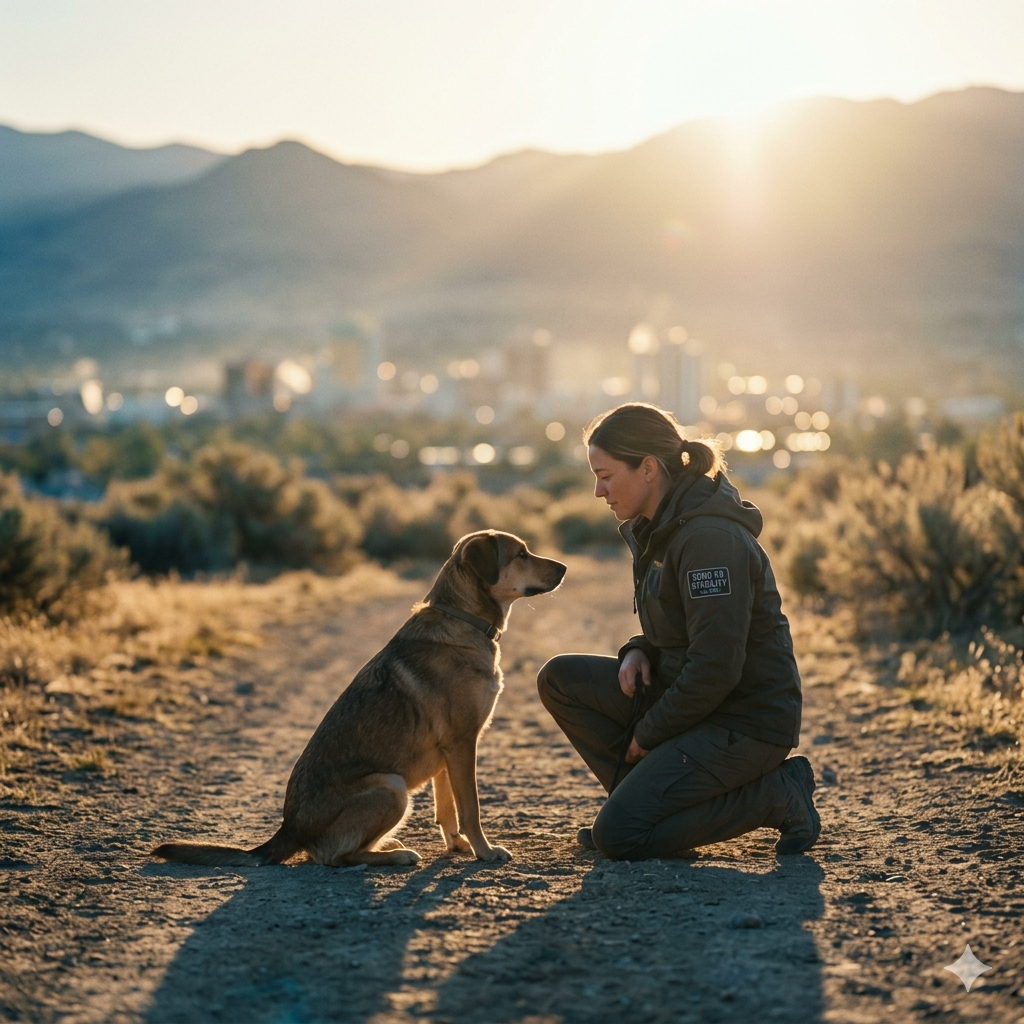
Many training programs measure success by how well a dog follows commands. We measure success by how well a dog maintains stability under pressure.
Behavioral resilience means the dog can:
• Stay composed in unfamiliar environments
• Recover quickly from stress
• Make appropriate decisions without constant direction
This shift in focus is critical for long-term reliability. A dog that only obeys in ideal conditions is not truly trained.
Spatial Design of Training Environments
The physical layout of a training space plays a significant role in learning outcomes. Open fields, enclosed areas, textured surfaces, and variable terrain all contribute to how a dog processes movement and boundaries.
We design our training environments in Reno to include:
• Transitional spaces that teach boundary awareness
• Multi-surface zones for sensory adaptation
• Movement corridors that improve leash dynamics
• Social zones for controlled interaction
This spatial diversity enhances both physical coordination and mental engagement.
The Role of Stress Calibration
Stress is not inherently negative in dog training. When applied correctly, it becomes a tool for growth. The key is calibration.
Too little stress results in boredom and slow learning. Too much stress leads to avoidance and behavioral regression.
Our approach focuses on controlled stress exposure. We introduce manageable challenges that encourage the dog to problem solve and adapt. Over time, this builds confidence and reduces reactivity.
Why Reno Requires a Specialized Approach
Reno presents a unique training landscape. The mix of urban areas, open spaces, and high human activity creates a wide range of stimuli for dogs.
Dog training schools in Reno must account for:
• Fluctuating noise levels
• Seasonal environmental changes
• Diverse public interactions
• Varied terrain and elevation
At Hazard K9, we incorporate these regional factors into our training methodology. This ensures that dogs are not just trained, but locally adapted.
Long-Term Behavioral Architecture
Our goal is not short-term obedience but long-term behavioral stability. This requires a structured progression that continues beyond initial training.
We provide frameworks that allow owners to:
• Maintain training consistency at home
• Gradually increase environmental complexity
• Reinforce behaviors through daily routines
Training becomes a lifestyle rather than a one-time service.
A New Standard for Dog Training Schools in Reno
Dog training is no longer about teaching isolated commands. It is about shaping how a dog perceives and interacts with the world.
At Hazard K9, we position ourselves at the intersection of behavioral science and practical application. Our approach to dog training schools in Reno is built on environmental intelligence, cognitive balance, and real-world adaptability.
When training is designed as a system rather than a set of commands, the results are not only more reliable but also more meaningful for both the dog and the owner.
