

Choosing Between Group Classes and Private Dog Training Sessions in Reno
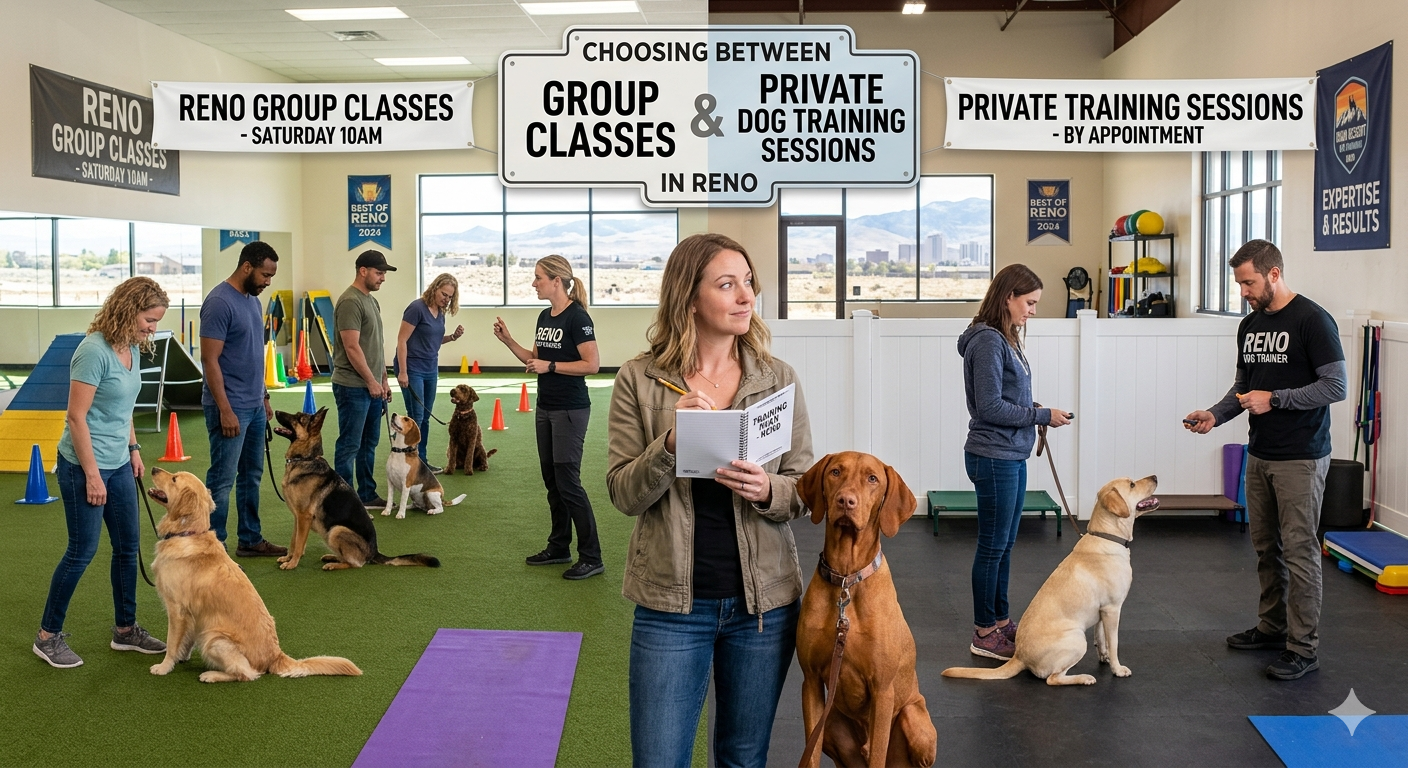
Choosing Between Group Classes and Private Dog Training Sessions in Reno
Training plays a major role in shaping a dog's behavior, confidence, and ability to interact positively with people and other animals. Whether you have a new puppy, a recently adopted rescue, or an older dog that needs help with specific behavioral issues, choosing the right training approach can make a significant difference in the results you achieve. One of the most common decisions dog owners face is whether to enroll their dog in group classes or invest in private training sessions.
Both options offer unique advantages, and the best choice often depends on your dog's personality, training goals, and lifestyle. Understanding the differences between these training methods can help you make an informed decision that supports your dog's long-term success.
Understanding Group Dog Training Classes
Group classes bring together multiple dogs and their owners in a structured learning environment. These classes are typically organized around specific skill levels, such as puppy training, basic obedience, intermediate obedience, or advanced training.
One of the biggest benefits of group classes is socialization. Dogs have the opportunity to work around distractions while learning how to behave appropriately in the presence of other dogs and people. This exposure can be especially valuable for puppies and young dogs that are still developing social skills.
Group classes also help owners practice maintaining their dog's focus in a busy environment. Since real-life situations often involve distractions, learning obedience commands around other dogs can improve reliability and responsiveness.
The group setting can create a supportive atmosphere where owners share experiences, celebrate progress, and learn from each other's challenges. Many people appreciate the sense of community that develops during regular training sessions.
Another advantage is affordability. Group classes generally cost less than private training sessions, making them an attractive option for owners seeking professional guidance while staying within a budget.
Situations Where Group Classes Work Well
Group training can be highly effective for dogs that are comfortable around other animals and people. Puppies often thrive in these environments because they gain valuable social experiences while learning foundational obedience skills.
Dogs that need help with basic commands such as sit, stay, come, down, and loose-leash walking can benefit greatly from group instruction. Owners who enjoy structured learning and consistent weekly practice often find group classes motivating and rewarding.
Group settings can also help dogs learn patience and impulse control. Waiting their turn, focusing on their handler, and ignoring distractions are valuable skills that translate into everyday life.
Understanding Private Dog Training Sessions
Private training provides one-on-one instruction tailored specifically to your dog and your family's needs. Rather than following a standardized curriculum, the trainer develops a customized plan that addresses your dog's unique challenges and goals.
Private sessions offer a highly personalized experience. The trainer can evaluate your dog's behavior, identify specific issues, and create targeted exercises designed to produce faster progress.
Many behavioral concerns require individualized attention. Problems such as aggression, fearfulness, severe anxiety, excessive barking, resource guarding, and reactivity often benefit from the focused approach that private training provides.
Private lessons also allow owners to work at their own pace. There is no pressure to keep up with a class schedule or progress alongside other dogs. The trainer can spend additional time on difficult areas and adjust the program as needed.
Another advantage is flexibility. Sessions can often be conducted in your home, neighborhood, or other locations where behavioral issues commonly occur. This real-world training environment can lead to more practical and lasting results.
When Private Training Is the Better Choice
Private training is often the preferred option for dogs with significant behavioral challenges. If your dog becomes overly stressed, reactive, or distracted around other dogs, jumping directly into a group class may not be productive.
Owners who have specific goals, such as preparing a service dog, improving advanced obedience, or addressing household behavior problems, may also benefit from individualized instruction.
Busy families frequently appreciate the flexibility that private training offers. Scheduling sessions around work, school, and family commitments can make it easier to stay consistent with training.
Dogs that learn at a different pace than average may also perform better in a one-on-one setting where lessons can be adapted to their specific needs.
Comparing Learning Environments
The learning environment is one of the biggest differences between group and private training.
Group classes expose dogs to a variety of distractions. This can strengthen obedience and improve focus, but it may also be challenging for dogs that struggle with overstimulation.
Private sessions provide a controlled environment where distractions can be introduced gradually. This approach allows trainers to build confidence and skills before increasing difficulty levels.
Neither environment is inherently better. The ideal setting depends on your dog's temperament, current skill level, and behavioral history.
The Role of Socialization
Socialization is often cited as a major reason for choosing group classes. Dogs learn to remain calm around unfamiliar dogs, people, and activities while practicing obedience skills.
However, socialization does not necessarily mean direct interaction. Well-structured training focuses on teaching dogs to coexist calmly and confidently in shared spaces.
Private training can still incorporate socialization exercises. Trainers may arrange controlled exposures and carefully planned encounters that support positive experiences without overwhelming the dog.
For some dogs, gradual socialization through private training is actually more effective than immediate participation in a group environment.
Cost Considerations
Budget is another factor many owners consider when choosing between training options.
Group classes generally offer a lower cost per session because multiple participants share the trainer's time. This makes them an economical choice for learning foundational skills and maintaining ongoing training practice.
Private sessions require a larger financial investment because the trainer's full attention is devoted to one dog and owner. However, the customized instruction can often produce faster progress for complex issues, potentially reducing the overall number of sessions needed.
When evaluating cost, it is important to consider the value of achieving long-term behavioral improvements and strengthening the relationship between you and your dog.
Can You Combine Both Approaches?
Many dog owners achieve excellent results by combining private training with group classes.
A dog may begin with private lessons to establish foundational skills, build confidence, and address specific behavioral concerns. Once those skills are in place, transitioning into a group class can provide valuable opportunities to practice obedience around distractions.
This blended approach offers the benefits of individualized instruction while also helping dogs develop social skills and reliability in more challenging environments.
Professional trainers often recommend this progression because it creates a strong foundation before introducing the additional demands of a group setting.
Finding the Right Fit for Your Dog
Every dog is different. Some thrive in energetic group environments, while others learn best through individualized instruction. The right training choice depends on factors such as age, temperament, behavioral history, socialization level, and training goals.
Observing your dog's reactions in different situations can provide valuable insight into which approach is likely to be most successful. Consulting with an experienced trainer can also help determine the best path forward.
At Hazard K9, we understand that no two dogs are exactly alike. Our goal is to help owners find training solutions that match their dog's needs while creating a positive and productive learning experience.
Whether your dog would benefit from the social environment of group classes or the personalized attention of private instruction, the most important factor is consistency. Effective training requires patience, practice, and a commitment to reinforcing desired behaviors over time.
The team at Hazard K9 works closely with dog owners throughout Reno to develop training programs that build confidence, strengthen communication, and encourage lasting behavioral success. By choosing the training format that best fits your dog's personality and goals, you can create a foundation for a happier and more rewarding relationship.
When evaluating your options, remember that successful training is not about choosing the most popular method. It is about selecting the approach that allows your dog to learn, grow, and succeed. With the right guidance and dedication, both group classes and private training sessions can provide meaningful results that improve everyday life for both you and your canine companion.
Hazard K9 is committed to helping dogs and their owners achieve those results through professional, effective, and personalized training solutions.
