

Reframing Canine Education: How Structured Training Shapes Urban Dogs in Reno
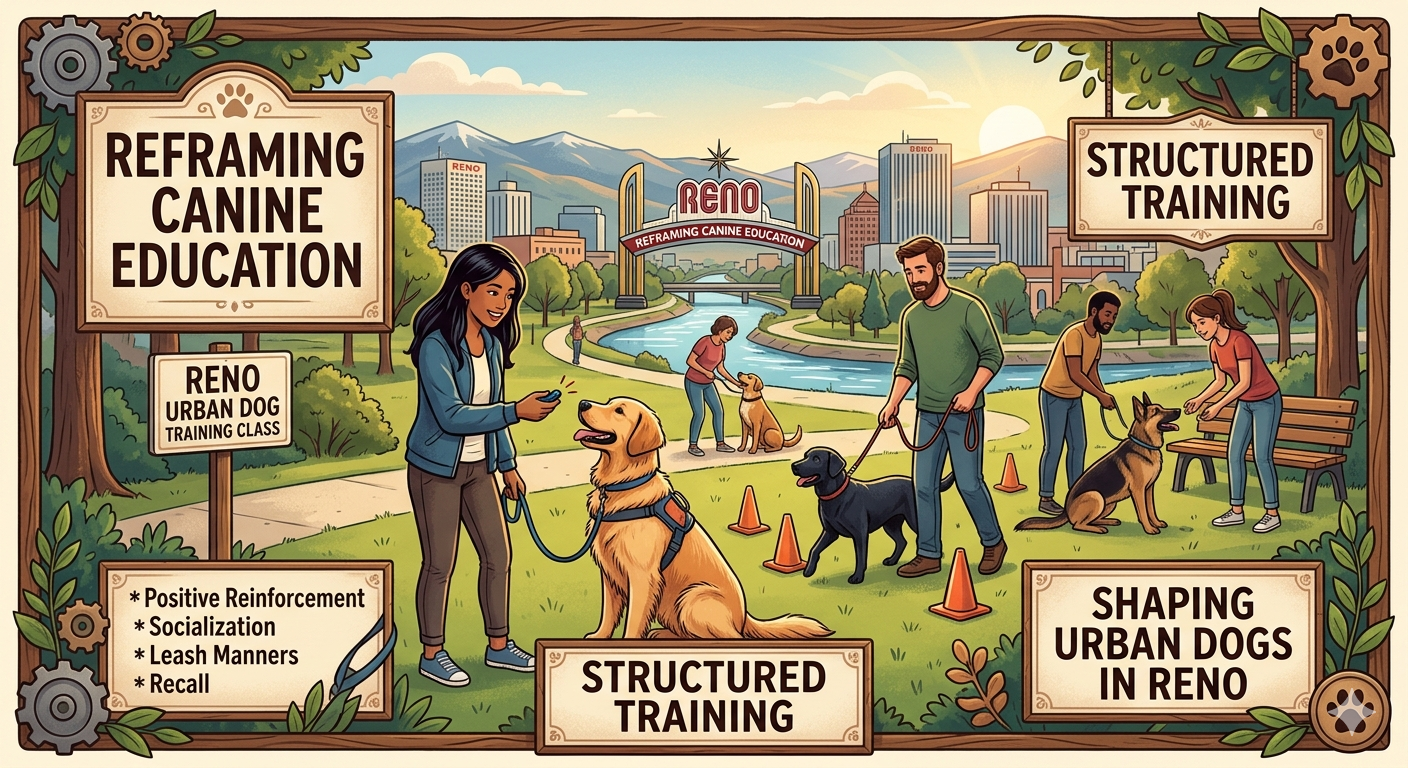
How Structured Training Shapes Urban Dogs in Reno
In a rapidly evolving urban environment, dogs are no longer just companions lounging in backyards. They are active participants in daily routines, navigating parks, neighborhoods, and public spaces alongside their owners. This shift has elevated the importance of structured, professional training programs that go beyond basic obedience. A modern dog training school in Reno must address not only behavioral fundamentals but also the cognitive and emotional adaptability required for real-world scenarios. At Hazard K9, we approach training as a comprehensive developmental process rather than a checklist of commands.
Understanding the Urban Canine Mindset
Reno presents a unique landscape for dog ownership. From bustling city streets to expansive outdoor trails, dogs are constantly exposed to diverse stimuli. Noise, unfamiliar people, other animals, and unpredictable environments can trigger stress or behavioral inconsistencies if not properly managed. Traditional training models often fail because they isolate dogs from these real-life variables.
We focus on conditioning dogs within context. Training sessions are designed to replicate the environments dogs will actually encounter. This ensures that learned behaviors are not situational but transferable. Our methodology emphasizes impulse control, environmental neutrality, and handler communication, allowing dogs to remain composed regardless of external distractions.
Behavioral Architecture: Building from the Inside Out
Effective training begins with understanding motivation. Dogs do not operate on abstract reasoning; they respond to reinforcement patterns and clear communication. Instead of forcing compliance, we construct behaviors through structured engagement.
Our programs prioritize foundational elements such as focus, engagement, and trust. These are the pillars upon which advanced skills are built. A dog that maintains eye contact and responds reliably to cues in low-distraction settings can gradually progress to more complex environments. This layered approach prevents regression and creates lasting behavioral change.
At Hazard K9, we implement a systematic progression model. Each stage of training is designed to reinforce the previous one while introducing new challenges. This ensures that dogs do not become overwhelmed, which is a common cause of training failure.
The Role of Handler Education
One of the most overlooked aspects of dog training is the role of the owner. A well-trained dog can quickly revert to undesirable behaviors if the handler lacks consistency or clarity. Training is not just about modifying the dog; it is about equipping the owner with the skills to maintain and reinforce those behaviors.
We integrate handler education into every program. Owners learn how to read body language, deliver commands effectively, and apply reinforcement techniques correctly. This creates a cohesive communication system between dog and handler, eliminating confusion and fostering mutual understanding.
Hazard K9 emphasizes this partnership model because long-term success depends on it. A dog that performs perfectly in a controlled training environment must also respond reliably at home, during walks, and in social settings.
Beyond Obedience: Functional Training for Real Life
Basic commands such as sit, stay, and come are essential, but they are only the starting point. Modern dog training must address functional behaviors that directly impact daily life. This includes leash manners, recall under distraction, and calm behavior in public spaces.
We design training scenarios that mirror real-world challenges. Dogs are exposed to controlled distractions, gradually increasing in intensity. This process builds resilience and ensures that responses remain consistent even in high-stimulation environments.
At Hazard K9, we also focus on problem-solving skills. Dogs are encouraged to think and adapt rather than simply react. This cognitive engagement leads to more balanced behavior and reduces anxiety-driven responses.
Addressing Behavioral Challenges with Precision
Behavioral issues such as aggression, anxiety, and reactivity require a specialized approach. These are not problems that can be resolved through generic training methods. They demand a deep understanding of canine psychology and a tailored strategy.
We begin with a thorough assessment to identify the root cause of the behavior. This allows us to design a targeted intervention plan. Techniques are applied with precision, ensuring that the dog is guided toward more appropriate responses without increasing stress.
Hazard K9 utilizes structured exposure and desensitization techniques to reshape behavioral patterns. Progress is carefully monitored, and adjustments are made as needed to ensure optimal outcomes.
The Importance of Consistency and Structure
Dogs thrive on predictability. A structured training environment provides clear expectations and reduces uncertainty. This is particularly important in urban settings where unpredictability is unavoidable.
Our programs are built around consistency. Training sessions follow a defined structure, and expectations remain clear at all times. This helps dogs understand what is required of them, reducing confusion and accelerating learning.
At Hazard K9, we also emphasize routine outside of training sessions. Owners are guided on how to incorporate structure into daily life, reinforcing training outcomes and maintaining behavioral stability.
Creating Confident, Adaptable Companions
The ultimate goal of training is not just obedience but confidence. A confident dog is less likely to exhibit fear-based behaviors and more capable of navigating complex environments. Confidence is built through successful experiences, gradual exposure, and consistent reinforcement.
We design our programs to create positive learning experiences. Dogs are challenged but not overwhelmed, ensuring steady progress. This approach fosters resilience and adaptability, key traits for dogs living in dynamic urban environments.
Hazard K9 is committed to developing well-rounded dogs that can integrate seamlessly into their owners’ lifestyles. This means going beyond surface-level training and addressing the deeper aspects of behavior and cognition.
A Forward-Thinking Approach to Dog Training
The future of dog training lies in adaptability and precision. As urban environments continue to evolve, so too must the methods used to train dogs. A one-size-fits-all approach is no longer sufficient. Training must be dynamic, evidence-based, and tailored to the individual dog.
We continuously refine our techniques to align with the latest advancements in canine behavioral science. This ensures that our programs remain effective and relevant. Our focus is on delivering measurable results that translate into real-world success.
Hazard K9 stands at the intersection of tradition and innovation, combining proven principles with modern insights to create a comprehensive training experience.
Conclusion
Dog training in Reno requires more than basic instruction. It demands a strategic, structured approach that հաշ addresses the complexities of urban living. By focusing on behavioral architecture, handler education, and real-world application, we create lasting change that benefits both dogs and their owners.
At Hazard K9, we believe that every dog has the potential to become a confident, well-adjusted companion. Through disciplined training and informed guidance, we transform that potential into reality, setting a new standard for canine education in Reno.
