

The Difference Between a Well-Trained Dog and a Truly Reliable Dog
Understanding Why Training and Reliability Are Not the Same
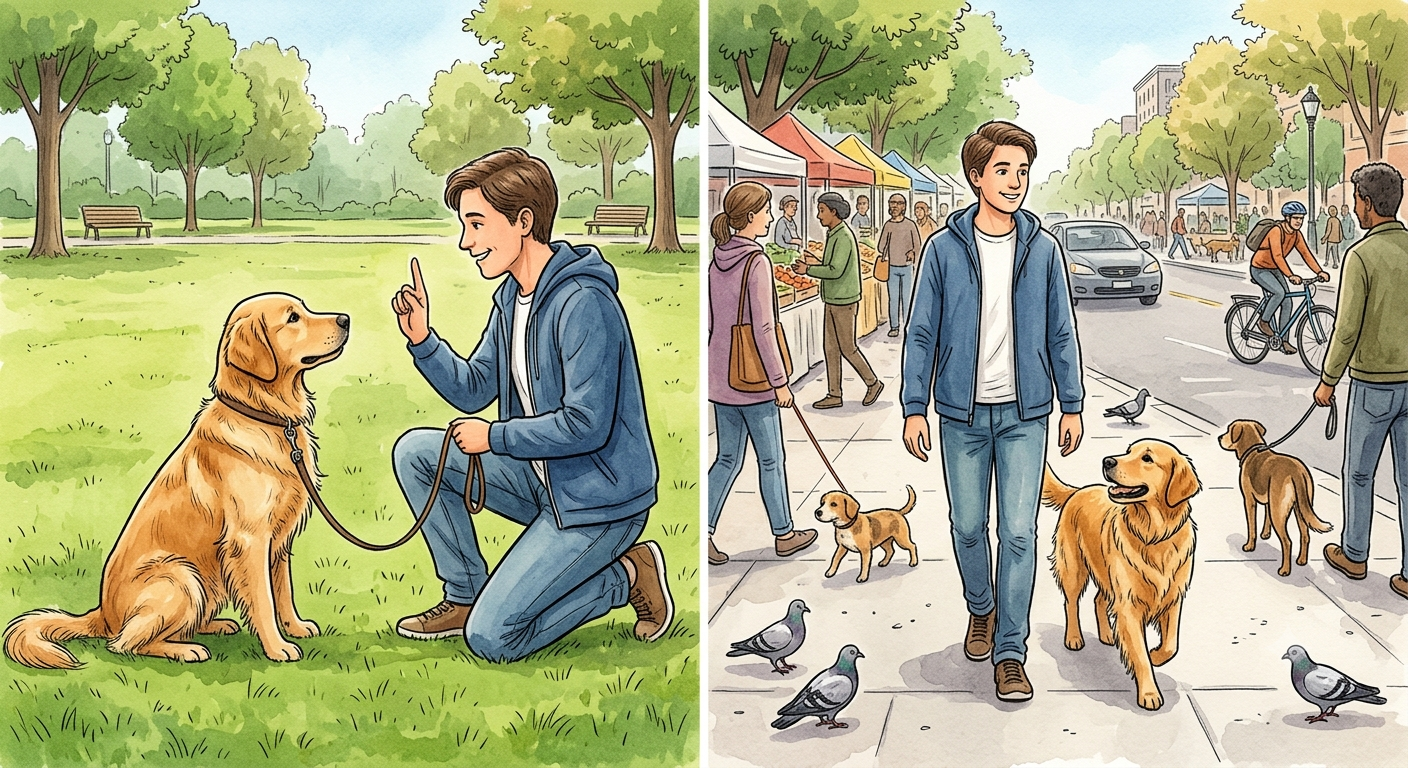
Many dog owners assume that a dog who knows commands is automatically a well-trained and reliable companion. While obedience training is an important foundation, knowing a command and consistently following it are two very different things. A dog may sit perfectly in the living room, come when called in the backyard, and walk politely when there are no distractions around. However, the real test begins when the environment changes and the dog is exposed to excitement, fear, unfamiliar people, other animals, or unexpected situations. True reliability means that the dog can maintain appropriate behavior even when circumstances make obedience more challenging. At Hazard K9, we believe successful training should prepare dogs for real life rather than simply helping them perform commands under ideal conditions.
A well-trained dog often understands what a particular command means and can demonstrate that understanding in familiar environments. A reliable dog, on the other hand, has developed the ability to respond consistently despite distractions and environmental pressure. This distinction is important because dogs do not naturally generalize lessons the way humans often expect them to. A dog may understand "come" inside the house but struggle to respond when chasing a squirrel or playing with another dog. The difference lies in proofing the behavior across different locations, situations, and levels of distraction. Reliability develops when training moves beyond basic command recognition and becomes a deeply reinforced pattern of behavior.
Obedience Is the Beginning, Not the Final Goal
Teaching a dog basic commands is an essential first step in creating structure and communication. Commands such as sit, down, stay, heel, place, and recall give owners practical tools for guiding their dogs through everyday situations. These skills can improve household manners and make life more enjoyable for both the dog and the owner. However, obedience demonstrated during a short training session does not necessarily predict how the dog will behave throughout the day. A dog can perform ten perfect repetitions of a command and still ignore that same command when something more interesting captures its attention. This is why basic obedience should be viewed as the beginning of the training process rather than the final destination.
True reliability requires a deeper level of understanding and consistency. The dog must learn that commands remain meaningful regardless of where they are given or what distractions are present. This requires gradual exposure to increasingly difficult situations while maintaining clear expectations. The dog also needs enough practice to develop confidence and familiarity with making good choices under pressure. A reliable response should not depend entirely on the owner having food in hand or being in a perfectly controlled environment. Instead, the dog should understand that listening is an expected part of daily life across many different situations.
Distractions Reveal the Real Level of Training
One of the clearest ways to identify the difference between training and reliability is to observe a dog around distractions. Nearly every dog can appear highly obedient when nothing competes for its attention. The challenge becomes significantly greater when another dog walks nearby, children are playing, traffic is moving, or wildlife suddenly appears. These situations introduce competing motivations that can quickly expose weaknesses in a dog's training foundation. A dog that only responds when conditions are calm may have learned commands without developing true reliability. Consistency under distraction is what transforms obedience from a practiced exercise into a dependable behavior.
Distraction training should be approached progressively rather than by immediately placing a dog in an overwhelming situation. Dogs need opportunities to succeed as difficulty gradually increases. This process allows them to understand how to maintain focus even when the world around them becomes more interesting or stressful. Proper training also helps owners recognize when their dog is mentally prepared for greater challenges and when additional foundation work is necessary. Rushing this process can create confusion and frustration for both the dog and the handler. A truly reliable dog is usually the result of patient repetition, appropriate exposure, and carefully structured training experiences.
Reliability Requires Consistency Across Different Environments
Dogs often associate behaviors with specific locations and circumstances. This means a command learned in one environment may not automatically transfer to another. A dog might have an excellent heel inside a training facility but pull heavily when walking through a busy neighborhood. Similarly, a strong recall in a fenced yard may disappear at a park filled with new smells and movement. Reliable training requires intentionally practicing skills in multiple environments so the dog learns that expectations remain consistent. The goal is to help the dog understand the command itself rather than simply memorizing a routine connected to one particular location.
Environmental exposure also plays an important role in building confidence. Dogs encounter many different surfaces, sounds, people, animals, vehicles, and situations throughout their lives. A dog that has limited exposure may become uncertain or overly excited when faced with something unfamiliar. Carefully introducing new environments helps develop a more stable and adaptable mindset. At Hazard K9, we recognize that real-world training must consider the situations dogs and their owners actually experience outside controlled practice sessions. Reliability is strengthened when dogs learn to remain responsive and composed in a variety of everyday settings.
Emotional Control Is a Major Part of Dependability
A dog can understand every basic obedience command and still struggle with emotional control. Excitement, anxiety, frustration, fear, and prey drive can all influence how a dog responds to its owner. This is why reliable training is not only about teaching physical behaviors. It also involves helping the dog develop the ability to regulate its emotions and remain mentally engaged with the handler. A dog that becomes overly excited around visitors may know how to sit but be unable to maintain that position because its emotional state overwhelms its training. Reliability requires addressing both the behavior itself and the state of mind behind that behavior.
Developing emotional stability takes time and cannot always be achieved through repetitive commands alone. Dogs need structured experiences that teach patience, impulse control, and appropriate responses to stimulation. For example, remaining calm before greeting another dog can be just as important as knowing how to heel beside the owner. Waiting patiently before exiting a door can reinforce self-control in everyday situations. Learning to settle quietly around activity can be more valuable than constantly performing commands for rewards. A reliable dog understands when action is appropriate and when calm behavior is expected.
The Importance of Proofing Commands
Proofing is one of the most important steps in transforming basic obedience into dependable behavior. It involves practicing commands under gradually increasing levels of difficulty until the dog can perform them consistently. This may include changing locations, adding distractions, increasing distance, or practicing around unfamiliar people and animals. Proofing helps identify weaknesses that may not be visible during routine training sessions. It also allows trainers and owners to reinforce correct responses before placing the dog in situations where failure could create safety concerns. Without proofing, owners may mistakenly believe their dog is more dependable than it actually is.
The process should always be appropriate for the individual dog's skill level and temperament. Increasing difficulty too quickly can cause confusion and reduce confidence. Effective proofing challenges the dog while still providing a realistic opportunity for success. Over time, the dog learns that commands have the same meaning regardless of changing circumstances. This consistency strengthens communication between the dog and owner. A command becomes more than something the dog performs occasionally and instead becomes a dependable response that can be relied upon in daily life.
Motivation Alone Does Not Create Reliability
Many dogs initially learn through food, toys, praise, or other forms of motivation. These tools can be extremely valuable for teaching new behaviors and creating positive engagement. However, a dog that only listens when it sees a reward may not yet be truly reliable. The owner should not have to reveal a treat before every important command in order to gain cooperation. Training should gradually help the dog understand that responding appropriately is part of the established relationship and communication system. Motivation remains valuable, but it should not become the only reason the dog chooses to listen.
Reliable dogs understand expectations even when immediate rewards are not visible. This does not mean training should become joyless or that positive reinforcement should disappear. Instead, it means the dog has developed a more mature understanding of behavior and consequences. The dog can work through distractions and temporary frustration because the training foundation is clear and consistent. Owners should also learn how to maintain engagement without constantly negotiating every command. The strongest training relationships balance motivation, structure, communication, and accountability in a way that helps the dog understand what is expected.
Reliability Builds Trust Between Dogs and Owners
One of the greatest benefits of dependable training is the confidence it gives owners in everyday life. When owners know their dog can respond consistently, they are better prepared to navigate unpredictable situations. This can make walks, travel, visitors, public outings, and family activities significantly less stressful. Trust grows when the owner understands the dog's abilities and the dog understands the owner's expectations. That trust is not built through a single training session or a collection of commands. It develops through repeated successful experiences and consistent communication over time.
A reliable dog also tends to enjoy greater freedom because responsible owners can make better decisions about what their dog is prepared to handle. A dog with a dependable recall may safely enjoy more opportunities for controlled off-leash activity where appropriate and legally permitted. A dog with strong place training may be able to remain calmly nearby while guests visit. A dog with dependable leash skills can participate more comfortably in family outings. These freedoms are earned through training and demonstrated consistency rather than assumed because a dog has completed a basic obedience program. The more reliable the dog becomes, the more opportunities exist for a safe and balanced life alongside its family.
Real-Life Training Must Continue Beyond Formal Lessons
Completing a training program should not mean that training ends. Dogs continue learning from every experience, including the behaviors owners allow them to practice repeatedly. If a dog learns to pull successfully toward other dogs after formal training ends, that behavior can gradually become stronger. If commands are only practiced occasionally, the dog's responsiveness may become less consistent over time. Continued reinforcement helps preserve the skills developed during structured training. The most successful owners incorporate training naturally into everyday routines rather than viewing it as a separate activity.
Daily life provides countless opportunities to strengthen reliability. Asking for calm behavior before meals, practicing recalls during play, reinforcing polite door manners, and maintaining leash expectations all contribute to long-term consistency. Short and purposeful practice sessions can be highly effective when performed regularly. Owners also become better handlers as they learn how to read their dog's behavior and recognize potential challenges early. At Hazard K9, our goal is not simply to create dogs that look impressive during a training demonstration but to help build practical skills that support long-term success in real homes and real environments.
A Truly Reliable Dog Is Prepared for Real Life
The difference between a well-trained dog and a truly reliable dog ultimately comes down to consistency. A well-trained dog may know what a command means, while a reliable dog demonstrates that understanding when circumstances become difficult. Reliability involves distractions, unfamiliar environments, emotional control, impulse management, and continued practice over time. It requires owners to remain involved and committed to maintaining clear expectations after formal training sessions are complete. Most importantly, it reflects a relationship built on communication, trust, and consistent guidance.
Every dog is an individual, and the path toward reliability will look different depending on temperament, history, age, and lifestyle. The goal should not be perfection in every possible situation but meaningful progress toward dependable behavior that improves everyday life. When training focuses on real-world application rather than simply checking commands off a list, owners gain a clearer understanding of what their dogs can truly handle. A reliable dog is not created overnight, but the investment in consistent training can provide benefits for years to come. The result is a more confident owner, a more capable dog, and a stronger partnership built to handle the realities of life together.
