

From Basic Commands to Reliable Obedience: A Complete Guide to Training Your Dog in Reno
Training a dog is about much more than teaching a few basic commands or getting your pet to sit when asked. It is about building communication, establishing trust, encouraging positive behaviour, and creating a relationship where your dog understands what is expected in different situations. Whether you have recently welcomed a puppy into your home or are working with an older dog that needs better manners, consistent training can make everyday life considerably easier. In a busy and growing city like Reno, dogs encounter different environments, including neighbourhood streets, public parks, walking trails, outdoor dining areas, and places where they interact with unfamiliar people and animals. These experiences make reliable obedience particularly important for maintaining control and keeping your dog safe. With the right training approach, dogs can learn to respond confidently to commands, remain calm around distractions, and behave appropriately in different environments. Our goal is to help dog owners understand how structured training can turn everyday commands into dependable behaviours that last.
Understanding the Difference Between Basic Commands and Reliable Obedience
Many dog owners begin training by teaching simple commands such as sit, stay, come, down, and heel. These commands establish an important foundation because they help dogs understand basic expectations and respond to their owners in familiar surroundings. However, knowing a command does not necessarily mean a dog will follow it consistently in every situation. A dog might sit immediately inside the living room but completely ignore the same instruction when another dog walks past during a neighbourhood stroll. This happens because dogs often learn behaviours within specific environments rather than automatically understanding that the same rules apply everywhere. Reliable obedience means your dog can respond to familiar commands even when there are distractions, unfamiliar surroundings, or exciting activities happening nearby. Developing this level of consistency requires repetition, structured practice, patience, and gradually increasing the difficulty of training exercises.
Starting With a Strong Foundation of Basic Commands
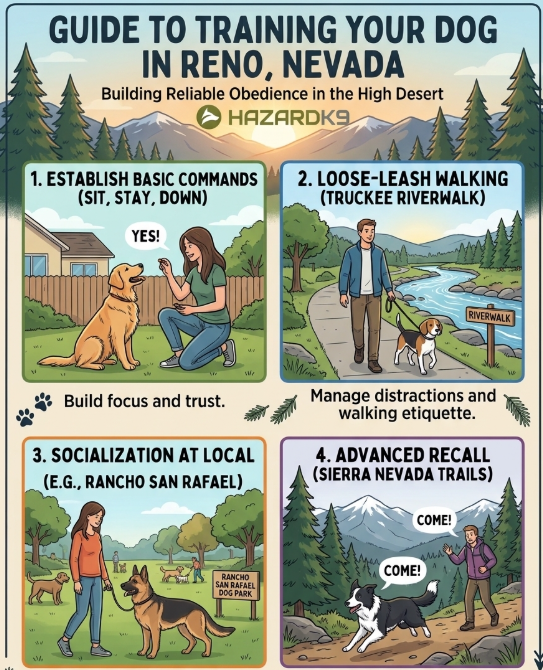
Every successful obedience programme begins with a clear understanding of fundamental commands. Teaching your dog to sit encourages patience and gives you a useful way to manage everyday situations, such as greeting visitors or waiting before receiving food. The stay command develops impulse control by teaching your dog to remain in one position until given permission to move. Recall, commonly known as the come command, is particularly important because it helps bring your dog back to you when necessary. Down can encourage calmer behaviour, while heel helps establish better walking habits by teaching your dog to remain close rather than constantly pulling on the leash. Each command should be introduced gradually, with clear verbal cues and appropriate rewards when your dog responds correctly. We recommend keeping early training sessions short and consistent so your dog can understand each behaviour without becoming overwhelmed or losing interest.
Positive Reinforcement and Its Role in Effective Dog Training
Positive reinforcement is one of the most useful approaches for teaching dogs new behaviours and strengthening existing commands. The principle is straightforward: when a dog performs a desired behaviour, it receives something rewarding, such as a treat, praise, affection, or an opportunity to enjoy an activity. This helps the dog associate the correct response with a positive experience and increases the likelihood of repeating that behaviour. For example, when teaching recall, rewarding your dog immediately after returning can help establish a stronger connection between responding to the command and receiving something enjoyable. Timing is important because rewards should follow the desired behaviour as quickly as possible. As your dog becomes more consistent, rewards can gradually become less predictable while verbal praise and other positive reinforcement continue. Consistency between family members is equally important because different commands, expectations, or reward patterns can confuse dogs and slow their progress.
Teaching Your Dog to Walk Properly on a Leash
Leash manners are essential for dogs living in residential neighbourhoods and exploring public spaces around Reno. Pulling, lunging, excessive sniffing, and constantly changing direction can make walks frustrating for owners and potentially unsafe in crowded environments. Loose-leash walking teaches dogs to move comfortably alongside their handlers without creating constant tension on the leash. Training should begin in a quiet area where your dog can concentrate on your movements and understand the expected walking position. Rewarding your dog when the leash remains loose helps reinforce the behaviour, while calmly redirecting attention when pulling begins can encourage better walking habits. Once your dog becomes more comfortable, gradually introduce additional distractions such as passing pedestrians, bicycles, other dogs, and unfamiliar surroundings. Consistent practice helps establish walking routines that make neighbourhood outings, park visits, and everyday exercise more enjoyable for everyone.
Building Reliable Recall for Better Safety and Control
Recall is one of the most valuable obedience skills a dog can develop because it allows owners to regain their dog's attention and bring them back when needed. Even a friendly and well-behaved dog can become distracted by wildlife, unfamiliar dogs, interesting smells, or sudden environmental changes. In outdoor areas around Reno, where walking trails and open recreational spaces offer plenty of stimulation, a dependable recall response can make an important difference. Begin by practising the come command indoors or within a secure, enclosed area where distractions are limited. Use an enthusiastic voice, reward your dog generously for returning, and avoid calling them repeatedly when they are unlikely to respond. As their understanding improves, introduce controlled distractions and gradually increase the distance between you and your dog. A long training line can provide additional control during outdoor practice, but recall should never be considered a substitute for leash requirements or secure fencing in public spaces.
Improving Impulse Control Around People, Dogs, and Distractions
Impulse control teaches dogs to manage their excitement and make better behavioural choices rather than immediately reacting to everything around them. Some dogs jump on visitors, rush through doorways, bark at passing animals, or become overly excited when they notice something interesting. These behaviours often develop because dogs have not learned how to pause, wait, and respond calmly. Training exercises such as waiting before meals, remaining seated while visitors enter, and maintaining attention around distractions can gradually improve self-control. For dogs that become excited when seeing other animals, maintaining an appropriate distance initially can make training more manageable. Rewarding calm observation and voluntary attention helps dogs understand that they do not need to react to every movement or sound. Over time, these exercises can improve your dog's ability to remain composed in everyday situations, making outings and social interactions more predictable.
Socialisation and Confidence in Different Environments
Socialisation is an important part of raising a well-adjusted dog, particularly during puppyhood when positive experiences can influence future behaviour. However, socialisation does not simply mean allowing your dog to interact with every person or animal they encounter. It involves gradually introducing them to different environments, sounds, surfaces, people, animals, and everyday experiences in a controlled and positive manner. Around Reno, dogs may encounter busy neighbourhood streets, parks, outdoor recreational areas, vehicle traffic, cyclists, and changing weather conditions. Helping your dog become comfortable with these experiences can reduce uncertainty and encourage more confident behaviour. Introductions should always happen at a pace that suits the individual dog, with enough distance and freedom to avoid overwhelming them. A dog that learns to remain relaxed around unfamiliar situations is generally easier to manage and better prepared for different everyday experiences.
Addressing Common Behavioural Challenges Through Structured Training
Not every dog begins training with the same behavioural needs. Some struggle with excessive barking, jumping, leash reactivity, destructive chewing, poor recall, or difficulty settling down when visitors arrive. Others may become anxious when left alone or display unwanted behaviours when exposed to unfamiliar environments.
Identifying the underlying reason behind a behaviour is an important part of choosing an effective training approach. For example, excessive barking may be connected to excitement, fear, territorial responses, frustration, or a desire for attention. Similarly, leash reactivity can have different causes and should not automatically be treated as simple disobedience. A structured training programme focuses on understanding the dog's behaviour, identifying triggers, and developing appropriate responses through consistent exercises. When behavioural concerns are severe, persistent, or involve aggression, professional assessment can help determine the safest and most suitable approach.
Why Consistency Matters More Than Occasional Training Sessions
One of the biggest mistakes dog owners make is treating training as an activity that only happens during dedicated lessons. Dogs learn through repetition and everyday experiences, which means their behaviour is influenced by how consistently owners reinforce expectations throughout the day. If a dog is allowed to jump on family members but corrected for jumping on visitors, it may struggle to understand the actual rule. Similarly, giving a command several times before expecting a response can unintentionally teach a dog that the first instruction does not matter. Establishing consistent household rules makes learning easier and helps prevent confusion. Short practice sessions throughout the day can reinforce commands without making training feel repetitive or exhausting. We encourage owners to make obedience part of regular routines, including feeding time, walks, playtime, greetings, and quiet periods at home.
Training Puppies Versus Adult Dogs
Puppies and adult dogs can both benefit from structured obedience training, although their learning requirements and starting points may differ. Puppies are generally introduced to foundational behaviours, including name recognition, house training, crate training, bite inhibition, socialisation, and basic commands. Their attention spans may be shorter, so training should involve brief, positive sessions that match their developmental stage. Adult dogs may already understand certain commands but require additional work to improve consistency or address established behavioural patterns. Some adult dogs have received little previous training, while others may have developed unwanted habits through inconsistent handling or limited exposure to different environments. Regardless of age, dogs can learn new behaviours when training is appropriate to their individual needs. A personalised approach helps identify existing strengths, address weaknesses, and establish realistic goals for long-term progress.
Making Obedience Training Part of Everyday Life in Reno
A well-trained dog should be able to apply learned behaviours beyond the training area. Everyday activities provide valuable opportunities to reinforce obedience and help dogs become comfortable responding in different environments. Practising sit before opening the front door, asking your dog to wait before crossing a driveway, and maintaining loose-leash walking during neighbourhood outings can strengthen familiar commands. Reno offers opportunities for outdoor activities, but owners should consider the environment, temperature, local leash regulations, and their dog's individual fitness before planning longer outings. Gradually exposing dogs to different surroundings can improve their ability to remain focused when conditions change.
Owners should also avoid introducing too many distractions before their dogs are ready to handle them successfully. By making training a regular part of daily life, you can help your dog develop behaviours that are useful both at home and when exploring the community.
How Professional Dog Training Can Accelerate Progress
Although owners can teach many basic commands independently, professional guidance can be valuable when training becomes inconsistent or more complex behavioural concerns arise. An experienced trainer can assess your dog's temperament, identify specific learning challenges, and develop an approach suited to their age, personality, and existing behaviour. Professional training also helps owners understand how to communicate clearly, use appropriate reinforcement, and respond consistently when unwanted behaviours occur. This guidance can be particularly helpful for dogs that struggle with distractions, leash manners, recall, impulse control, or obedience around unfamiliar people and animals. Another important benefit is learning how to maintain progress after formal training sessions have finished. At Hazard K9, we believe successful dog training should focus on practical skills that owners can confidently reinforce in everyday situations. The objective is not simply to teach a dog to perform commands during a lesson, but to establish dependable behaviours that support a safer and more enjoyable relationship.
Choosing the Right Dog Training Programme for Your Needs
Selecting a suitable training programme starts with understanding what you want your dog to achieve. A young puppy may need a programme focused on foundational obedience and early socialisation, while an adult dog might benefit from more advanced work involving recall, leash manners, and distraction management. Dogs with established behavioural challenges may require a more individualised assessment before beginning structured exercises. It is also important to consider the training methods used, the trainer's experience, the level of owner involvement, and whether the programme provides guidance for maintaining results at home. Training should be realistic, consistent, and designed around the dog's individual learning needs rather than relying on a one-size-fits-all approach. Owners should feel comfortable asking questions about the training process, expected progress, and the techniques being used. Choosing the right programme can make a significant difference in how effectively your dog develops reliable obedience skills.
Maintaining Long-Term Obedience After Training
Training does not end once your dog learns to respond to basic commands or completes a professional programme. Behaviours become more dependable when they are regularly practised and reinforced across different environments. Without continued practice, some dogs may gradually become less responsive, particularly when faced with unfamiliar distractions or exciting situations. Maintaining obedience involves revisiting essential commands, reinforcing good leash manners, practising recall in suitable controlled environments, and continuing to encourage calm behaviour. Owners should also recognise that changes in routine, surroundings, health, and maturity can influence a dog's responses. If an old behavioural challenge returns, revisiting the foundation exercises can help identify where additional practice is needed. A consistent approach helps preserve the progress already achieved while allowing dogs to continue developing confidence and better decision-making skills.
Build a Better Relationship With Your Dog Through Professional Training
A well-trained dog is not simply one that follows instructions. It is a dog that understands expectations, responds appropriately to its handler, and can navigate everyday experiences with greater confidence. From teaching basic commands to developing reliable recall, improving leash manners, and managing distractions, every stage of training contributes to a stronger relationship between dogs and their owners. The most successful results come from clear communication, positive reinforcement, structured practice, and realistic expectations. Whether you are starting with a young puppy or looking to improve the behaviour of an adult dog, investing in proper training can make everyday activities more enjoyable and manageable. Our team is committed to helping dog owners develop practical obedience skills and establish better communication with their pets.
Contact Hazard K9 today to discuss your dog's training needs and discover how a structured training programme can help you build a more confident, responsive, and well-behaved companion. Take the first step towards better obedience and enjoy the benefits of a stronger bond with your dog.
