

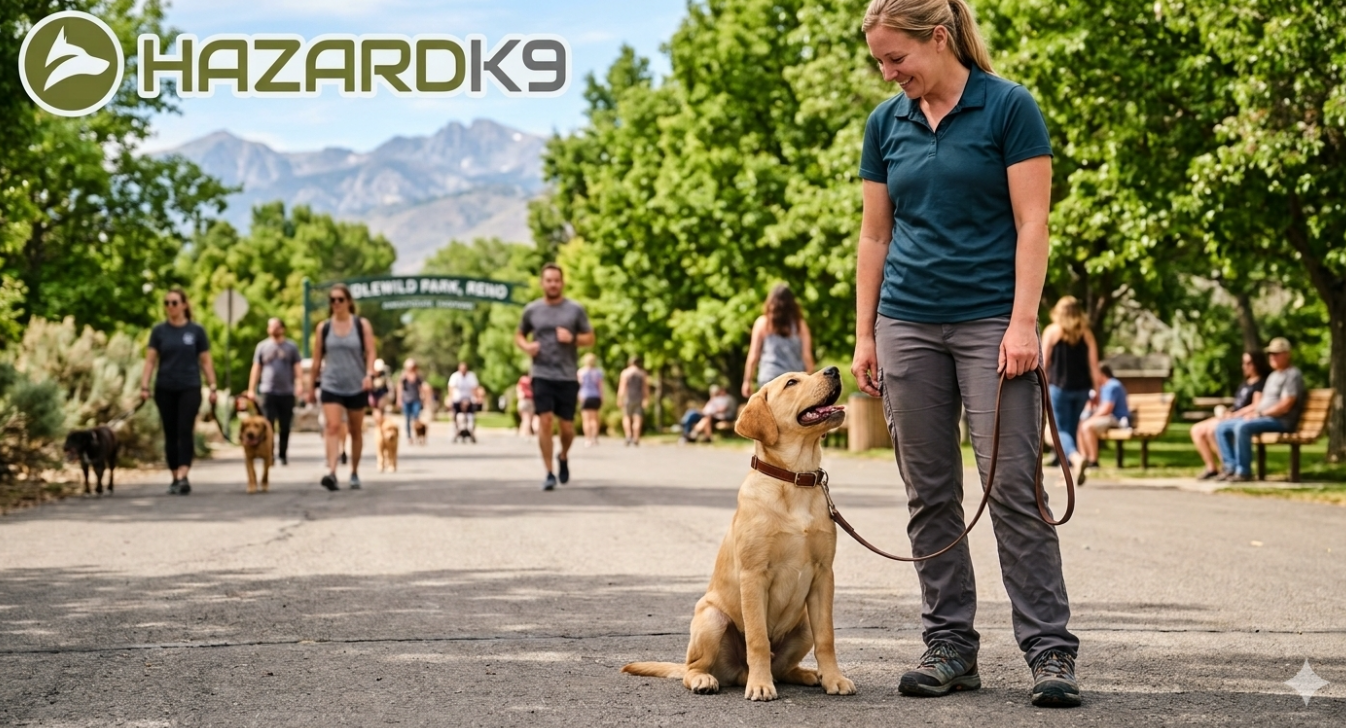
Preparing Your Puppy for Reno's Busy Parks Through Early Socialisation and Confidence Training
Bringing a new puppy into your family is an exciting experience, especially when you look forward to exploring the outdoor spaces, walking trails, and beautiful parks around Reno. From meeting other dogs to experiencing new environments, these outings can become an important part of your puppy's development. However, busy public parks can be overwhelming for young dogs that have not yet learned how to respond to unfamiliar sights, sounds, people, and animals. Early socialisation and confidence training help puppies develop the skills they need to navigate these environments without becoming fearful, anxious, or overly excited. Rather than simply exposing your puppy to as many experiences as possible, the goal is to introduce new situations gradually and create positive associations. With the right preparation, we can help puppies become more comfortable, confident, and responsive in different outdoor settings.
Why Early Socialisation Matters for Puppies
Early socialisation plays an important role in shaping how puppies understand and respond to the world around them. During their early developmental stages, puppies are particularly receptive to learning about unfamiliar environments, different people, animals, sounds, and everyday experiences. Positive introductions during this period can help reduce the likelihood of fear-based reactions as they grow older. For puppies living in Reno, this preparation is especially valuable because local parks can include everything from busy walking paths and cyclists to children playing, wildlife, and unfamiliar dogs. Without proper exposure, these everyday situations may cause a young dog to become nervous, reactive, or difficult to manage. We encourage owners to approach socialisation as an ongoing learning process that builds familiarity, trust, and emotional stability rather than forcing puppies into situations before they are ready.
Understanding the Challenges of Reno's Busy Parks
Reno offers a variety of outdoor spaces where dogs and their owners can enjoy fresh air, exercise, and social interaction. However, not every park environment is suitable for an inexperienced puppy straight away. Popular locations may have crowded pathways, running children, bicycles, skateboards, loud conversations, and dogs approaching from different directions. Some parks also have open spaces where wildlife, unfamiliar scents, and sudden movements can easily capture a puppy's attention. For a young dog, experiencing all these things simultaneously can create sensory overload, particularly when they have not developed reliable focus or confidence. We recommend starting with quieter outdoor environments before gradually introducing more stimulating locations. This allows puppies to process new experiences at a comfortable pace while learning that unfamiliar surroundings do not necessarily represent a threat.
Introducing Your Puppy to New People and Dogs
Meeting different people and dogs is an important part of social development, but the quality of these interactions matters more than the number of encounters. Puppies should learn that people with different appearances, voices, walking styles, and behaviours are a normal part of everyday life. Similarly, controlled introductions to friendly, vaccinated, and appropriately matched dogs can help puppies develop healthy communication skills. Not every dog will want to interact, and puppies should learn to respect personal space rather than approaching every animal they encounter. We encourage owners to observe their puppy's body language throughout these experiences, paying attention to signs of relaxation, curiosity, discomfort, or fear. Allowing puppies to approach voluntarily, take breaks, and move away when necessary helps establish positive associations. These early experiences can make future encounters in busy Reno parks much easier to manage.
Building Confidence Through Gradual Environmental Exposure
Confidence develops when puppies have opportunities to experience new situations without feeling pressured or overwhelmed. Instead of immediately taking a young dog into a crowded park, begin with quieter streets, open spaces, and less busy walking routes. Introduce different surfaces such as grass, gravel, pavement, and wooden walkways so your puppy becomes comfortable moving across various textures. Everyday sounds, including passing vehicles, distant conversations, lawn equipment, and bicycle bells, can also be introduced gradually at a manageable distance. Rewarding calm observation and voluntary exploration helps puppies understand that they can investigate unfamiliar surroundings safely. We believe that confidence training should focus on creating positive learning experiences rather than expecting puppies to overcome every fear immediately. Over time, these small experiences can help develop a dog that approaches unfamiliar environments with greater curiosity and emotional stability.
Teaching Essential Obedience Before Visiting Busy Parks
Basic obedience provides the foundation for safe and enjoyable public outings. Before introducing your puppy to crowded environments, it is helpful to establish essential behaviours such as responding to their name, maintaining attention, coming when called, walking comfortably on a lead, and settling when asked. These skills allow owners to communicate more effectively when distractions appear. For example, a puppy that understands a recall cue may be easier to redirect when another dog approaches, while a puppy that can focus on its handler is less likely to become overwhelmed by surrounding activity. Training should initially take place in familiar, low-distraction environments before gradually increasing the level of difficulty. We also recommend using positive reinforcement, including treats, praise, and play, to reward desirable behaviour. Reliable foundations make it easier to maintain control and support your puppy's confidence when exploring more stimulating public spaces.
Helping Your Puppy Stay Calm Around Other Dogs
Excitement around other dogs is common among puppies, particularly when they have limited experience interacting with unfamiliar animals. Some puppies may pull towards every dog they see, bark excessively, jump, or become frustrated when they cannot approach. Others may respond by hiding behind their owners or attempting to move away. Both reactions highlight the importance of teaching puppies how to remain comfortable around dogs without expecting direct interaction every time. Start by observing other dogs from a distance where your puppy can remain relaxed and responsive. Reward calm behaviour, encourage attention towards you, and gradually reduce the distance only when your puppy is comfortable. It is equally important to recognise that a successful social encounter does not always involve playing or greeting another dog. Learning to walk calmly past unfamiliar animals is a valuable skill that can make visits to busy parks safer and more enjoyable.
Using Positive Reinforcement to Develop Confidence
Positive reinforcement is one of the most effective ways to encourage desirable behaviour during early training. Puppies learn through repeated experiences, and rewarding calm responses helps them understand which behaviours lead to positive outcomes. When your puppy notices a bicycle, hears a loud noise, or sees an unfamiliar person without reacting fearfully, offer praise or a suitable treat. This creates a positive association with situations that might otherwise seem intimidating. Rewards should be delivered at the right moment so your puppy can connect the experience with the behaviour being encouraged. We also recommend keeping training sessions relatively short because young dogs have limited attention spans and can become tired quickly. Consistency is important, as practising the same behaviours across different environments helps puppies transfer their learning beyond the home. With patient guidance, positive reinforcement can support better focus, emotional control, and confidence.
Recognising Signs of Stress and Overstimulation
One of the most important responsibilities of a puppy owner is recognising when an environment becomes too challenging. Puppies cannot always communicate discomfort through obvious signs such as barking or trying to escape. More subtle signals may include repeated yawning, lip licking, excessive panting, turning away, tucked tails, lowered body posture, or suddenly refusing treats. Some puppies may become unusually energetic, jump excessively, or stop responding to familiar commands when they are overstimulated. These behaviours should not automatically be interpreted as disobedience. They may indicate that your puppy needs additional space, a quieter environment, or a break from the activity. We encourage owners to respond early rather than waiting for anxiety or frustration to escalate. Taking a step back is not a setback in training. It is an important part of helping your puppy develop positive relationships with unfamiliar environments.
Preparing for Different Park Activities and Distractions
Busy parks offer many opportunities for puppies to encounter situations they may not experience at home. Walking past joggers, watching children play, hearing playground equipment, and observing cyclists can all become useful training experiences when introduced appropriately. You can also practise walking calmly near benches, picnic areas, and other public spaces where people may gather. Start at a comfortable distance and reward your puppy for remaining relaxed while observing what is happening. As their confidence improves, gradually introduce more challenging environments while continuing to monitor their responses. It is also useful to practise stopping, changing direction, and checking in with you when distractions appear. These exercises teach puppies that they can rely on their handlers for guidance instead of reacting automatically to everything around them. Preparing for different park activities creates a stronger foundation for enjoyable outdoor adventures throughout Reno.
The Importance of Lead Manners and Recall Training
Good lead manners are essential when visiting public parks, particularly when walking paths are shared by dogs, pedestrians, cyclists, and families. Puppies should gradually learn to walk without constantly pulling, changing direction unexpectedly, or becoming distracted by every interesting smell. Loose-lead walking can be developed through short, consistent sessions that reward your puppy for staying near you. Recall training is equally important because it encourages your dog to return when called, even when something more interesting catches their attention. However, recall should be practised in secure, controlled environments before relying on it around major distractions. Owners should also understand that recall does not replace leash laws or the need for appropriate physical control in public areas. A well-fitted harness or collar, a suitable lead, and consistent communication can make outdoor training more manageable. These practical skills help puppies become more reliable companions as they gain experience in different environments.
Choosing the Right Time and Environment for Early Park Visits
The timing of your puppy's first park experiences can make a significant difference to their learning. Visiting during quieter periods may reduce the number of distractions and allow your puppy to explore without encountering too many unfamiliar situations at once. Early morning or less crowded weekday periods can provide opportunities to practise basic behaviours before introducing busier conditions. Choose locations with enough space to maintain a comfortable distance from unfamiliar dogs and people. Keep initial visits short, particularly if your puppy is still developing confidence or has limited experience outside the home. It is also important to discuss vaccination status and appropriate public exposure with your veterinarian before visiting shared outdoor areas. Depending on local disease risks and your puppy's vaccination schedule, controlled socialisation opportunities may be more suitable initially. Careful planning allows you to balance your puppy's developmental needs with responsible health and safety practices.
Why Consistent Training Makes a Long-Term Difference
Socialisation is not something that can be completed in a single afternoon or through occasional trips to the park. Puppies need repeated opportunities to practise their skills across different environments, situations, and levels of distraction. A dog that behaves confidently in a quiet neighbourhood may still struggle when introduced to a crowded walking trail or an unfamiliar group of dogs. This is why consistency between home training, structured socialisation, and outdoor practice is so important. Owners should continue reinforcing basic obedience, calm behaviour, and positive interactions as their puppies mature. It is also useful to revisit easier environments whenever a puppy struggles with a more challenging situation. At Hazard K9, we understand that every dog develops at a different pace, which is why training should be adapted to individual temperament, learning ability, and behavioural needs. A consistent approach helps build practical skills that remain useful well beyond the early puppy stages.
Professional Puppy Training and Socialisation Support in Reno
Although owners play an essential role in their puppy's development, professional guidance can make the socialisation process more structured and effective. Experienced trainers can help identify behavioural challenges, recommend appropriate training exercises, and introduce techniques that support confidence and obedience. This can be particularly helpful for puppies that display nervousness around unfamiliar dogs, become easily distracted, or struggle to settle in stimulating environments. Professional training also helps owners understand how to communicate clearly, reward desirable behaviours, and respond appropriately when their puppy encounters something unfamiliar. Rather than relying on repeated exposure alone, a structured approach focuses on developing the skills needed for real-world situations. Whether you are preparing for neighbourhood walks, outdoor adventures, or visits to Reno's popular parks, the right training foundation can make a meaningful difference. Working with a knowledgeable trainer gives you the opportunity to address concerns early and develop a more confident relationship with your dog.
Make Every Outdoor Experience a Positive Step Forward
Preparing your puppy for Reno's busy parks is about much more than teaching basic commands or introducing them to other dogs. It involves developing trust, encouraging curiosity, building emotional resilience, and helping them understand how to respond appropriately to the world around them. Early socialisation, positive reinforcement, confidence-building exercises, and consistent obedience training all contribute to these goals.
Remember that every puppy has a unique personality, and progress should be measured by their individual development rather than comparisons with other dogs. Some puppies may become comfortable in new environments quickly, while others need additional time and carefully managed experiences. Patience, consistency, and appropriate guidance can help create a strong foundation for a lifetime of positive outdoor experiences.
If you are ready to help your puppy develop better social skills, improve confidence, and become more comfortable around everyday distractions, we are here to help. Contact Hazard K9 to discuss your puppy's training needs and explore how structured training can support their development. Start building the right habits early so you and your dog can enjoy safer, more rewarding experiences throughout Reno and beyond.
