

Altitude-Responsive Canine Behavior Conditioning in Reno’s High-Desert Environment
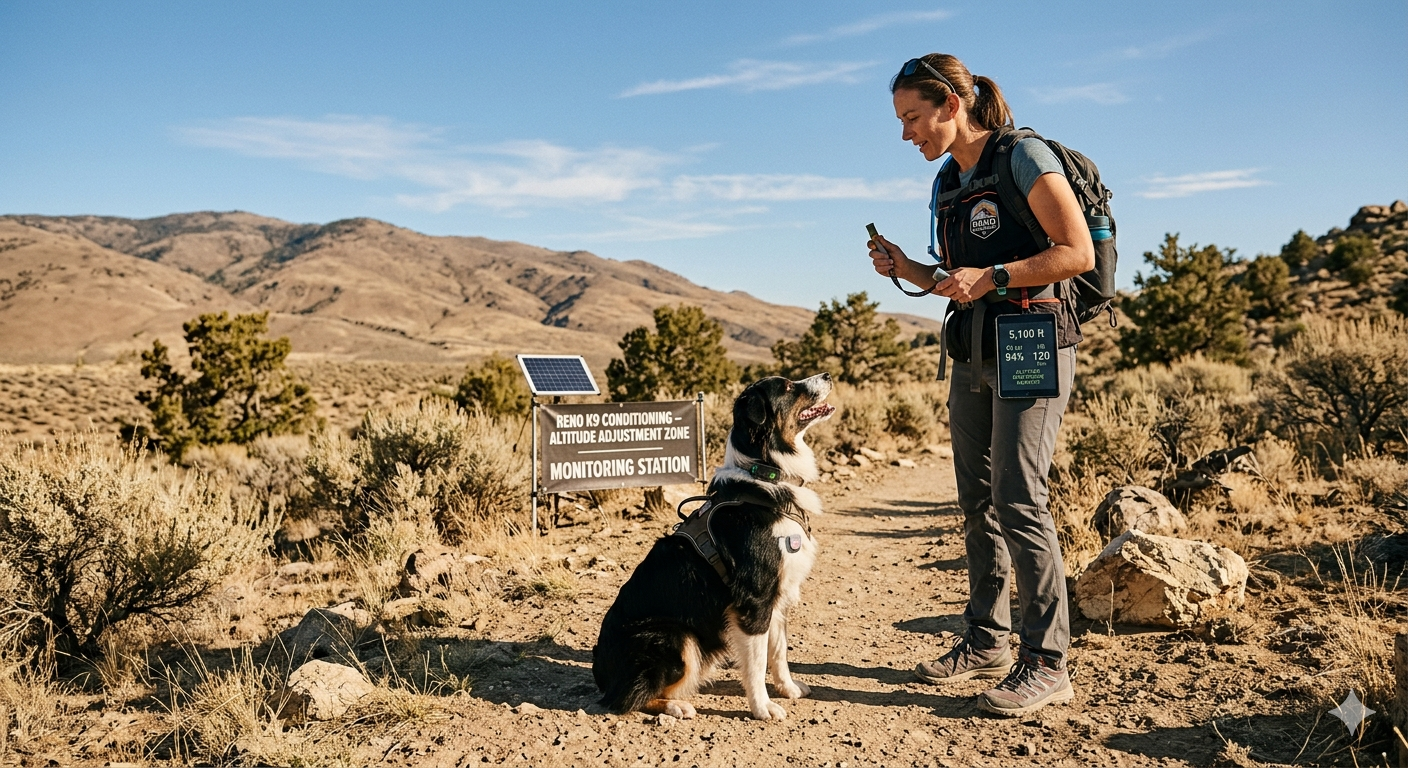
Altitude-Responsive Canine Behavior Conditioning in Reno’s High-Desert Environment
Reno presents a very specific set of environmental and behavioral challenges for working dogs. The combination of high-desert terrain, rapid temperature shifts, elevated arousal from outdoor stimuli, and frequent exposure to high-energy recreational spaces creates a training landscape that is significantly different from coastal or suburban environments.
This is why we approach K9 dog training Reno through a framework we call altitude-responsive canine behavior conditioning. It is not just obedience training. It is a structured method designed to regulate drive, stabilize decision-making under environmental stress, and improve clarity of response in dogs that are naturally high energy, reactive, or task-oriented.
At the center of this methodology is our work at Hazard K9, where we focus on building dogs that can remain mentally organized even when their environment is highly stimulating.
Why Reno’s Environment Changes Training Outcomes
Dogs do not generalize behavior in a vacuum. Environmental variables strongly influence how learned commands are executed.
In Reno, several factors consistently affect behavior:
• Lower oxygen density compared to sea-level environments, which can subtly impact endurance and recovery during intense training sessions
• High visual stimulation from open desert landscapes, wildlife movement, and wide field-of-view exposure
• Frequent arousal spikes due to outdoor recreational activity, including trails, parks, and urban-dog crossover zones
• Dry climate conditions that can influence physical comfort and irritability thresholds
These conditions often expose a gap between obedience in controlled settings and obedience under real-world stress. A dog may perform perfectly indoors but lose focus outdoors when arousal increases.
Our approach focuses on closing that gap through structured environmental conditioning rather than repetitive command drilling.
Core Principle: Regulating Arousal Before Teaching Obedience
Traditional training often begins with command learning. Our methodology reverses that priority.
We first establish what we call arousal baseline control. This means teaching the dog how to return to a neutral cognitive state before layering advanced obedience behaviors.
Without this foundation, commands become situational and unreliable.
We use structured exposure sequences that include:
• Controlled environmental overstimulation followed by enforced calm cycles
• Threshold-based engagement drills that require decision-making under distraction
• Reward timing calibration to reinforce cognitive clarity rather than excitement spikes
• Movement regulation exercises that prevent frantic or impulsive responses
The goal is not suppression of energy. It is conversion of energy into usable focus.
Training Pillar One: Environmental Pressure Conditioning
Dogs in Reno are regularly exposed to unpredictable environmental inputs. To prepare for this, we simulate controlled pressure scenarios.
These scenarios include:
• Sudden directional distractions during leash work
• Variable distance recall under open terrain exposure
• Layered sound and movement interference during command execution
• Structured pause-and-reset cycles during elevated stimulation
The intent is to teach the dog that environmental change does not alter behavioral expectations.
This is especially important for working breeds and high prey-drive dogs that naturally prioritize movement over handler engagement.
Training Pillar Two: Cognitive Reinforcement Sequencing
Instead of relying on repetition alone, we use sequencing that reinforces thinking before action.
Each training loop follows a predictable structure:
1. Environmental exposure is introduced
2. A command is given only after attention stabilization
3. The dog is required to maintain a brief cognitive hold before execution
4. Reward is delivered based on calm completion, not speed
This shifts the dog from reflexive behavior to deliberate response.
Over time, dogs begin to self-regulate before acting, which significantly reduces reactivity and improves off-leash reliability.
________________________________________
Training Pillar Three: Drive Channeling for Working Breeds
High-drive dogs are not inherently difficult. They are simply misdirected in many cases.
We focus on channeling drive into structured tasks such as:
• Controlled pursuit games with clear start and stop cues
• Structured tug engagement with enforced disengagement rules
• Scent-based problem solving under handler guidance
• Impulse interruption drills during peak excitement states
This ensures that drive is not removed but redirected into controllable frameworks.
At Hazard K9, we often see that once drive is properly channeled, behavioral issues decrease dramatically without the need for excessive correction.
Real-World Application in Reno
Training must translate into everyday environments to be meaningful.
In Reno, this includes:
• Dog-friendly outdoor dining areas
• Public trail systems with high foot traffic variability
• Residential neighborhoods with frequent stimulus overlap
• Open desert zones where recall integrity is tested at distance
We systematically transition dogs from controlled environments into these real-world settings only after cognitive stability is demonstrated.
This staged progression prevents regression and builds long-term behavioral consistency.
The Importance of Handler Timing and Consistency
One of the most underestimated factors in training success is handler timing.
Inconsistent reinforcement timing leads to confusion in dogs, especially those with high sensitivity to environmental change.
We train handlers to:
• Deliver commands only when attention is fully established
• Avoid overlapping verbal cues
• Maintain consistent reward thresholds
• Recognize early signs of overstimulation before escalation occurs
When handler behavior becomes predictable, dog behavior stabilizes rapidly.
________________________________________
Long-Term Behavioral Outcome
The goal of this system is not temporary obedience. It is durable behavioral structure.
Dogs trained under this framework typically demonstrate:
• Lower reactivity in high-distraction environments
• Improved recall reliability at distance
• Faster emotional recovery after stimulation
• Reduced impulsive decision-making
• Stronger handler focus under environmental pressure
These outcomes are especially important in a city like Reno, where dogs frequently transition between calm residential spaces and highly stimulating outdoor environments.
Effective K9 development in a high-desert environment requires more than basic obedience protocols. It requires an integrated understanding of environment, arousal, cognition, and handler influence.
By prioritizing structured exposure, cognitive sequencing, and drive channeling, we build dogs that are not only trained but behaviorally resilient in real-world conditions.
Hazard K9 applies this framework to ensure dogs in Reno develop stability that holds under pressure, not just in controlled training spaces.
Hazard K9 remains committed to advancing modern K9 dog training Reno through systems that prioritize clarity, structure, and long-term behavioral reliability.
