

Dog Barking Problems and How Professional Trainers Address Them in Reno
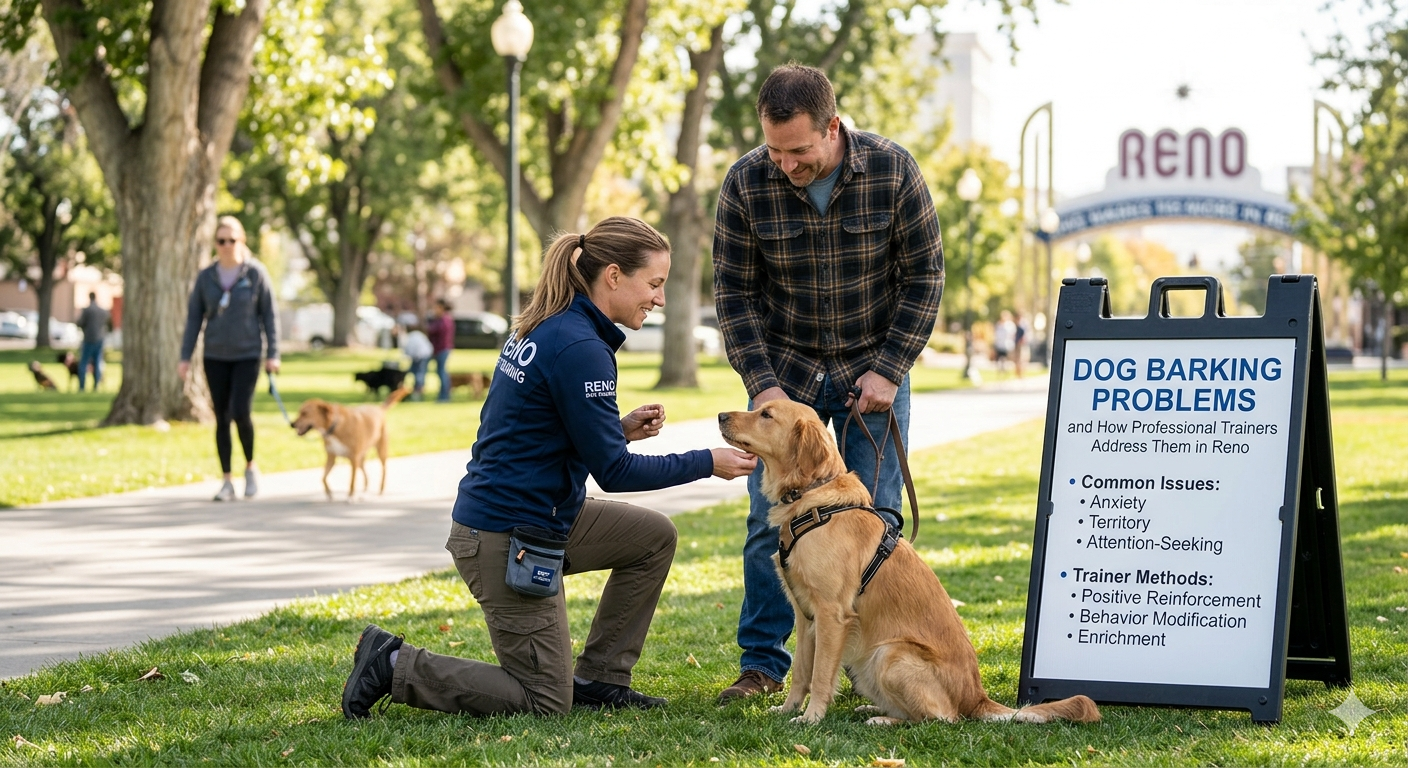
Dog Barking Problems and How Professional Trainers Address Them in Reno
Excessive barking is one of the most common challenges dog owners face. While barking is a natural form of communication, constant or uncontrolled barking can create stress for families, neighbors, and even the dogs themselves. Whether a dog barks at strangers, noises, other animals, or simply out of boredom, understanding the root cause is the first step toward finding an effective solution.
In Reno, where dogs enjoy a variety of outdoor activities and social environments, barking issues can become especially noticeable. Professional training helps identify the reasons behind excessive barking and provides structured methods to create lasting behavioral changes. With the right guidance, dogs can learn appropriate ways to communicate while remaining calm and confident in different situations.
Understanding Why Dogs Bark
Dogs bark for many reasons. Some barking is completely normal and serves an important purpose. A dog may bark to alert its owner of something unusual, express excitement, seek attention, or communicate discomfort.
Problems arise when barking becomes excessive, repetitive, or difficult to control. Many owners focus on stopping the barking itself without understanding what is causing the behavior. Successful training begins by identifying the motivation behind the barking.
Common causes include fear, anxiety, territorial instincts, frustration, loneliness, lack of exercise, and insufficient mental stimulation. Each cause requires a different training approach, which is why professional assessment is so valuable.
Territorial and Protective Barking
Many dogs bark when they see people, animals, or vehicles approaching their home. This behavior often stems from a natural instinct to protect their territory and family.
While some level of alert barking is acceptable, excessive territorial barking can become disruptive. Dogs may spend hours reacting to every passerby, creating stress for both the dog and the household.
Professional trainers work to teach dogs that not every stimulus requires a response. Through controlled exposure and reward-based training techniques, dogs learn to remain calm when encountering everyday situations. Over time, they develop better impulse control and become less reactive to normal activity around their environment.
Barking Caused by Anxiety
Anxiety is another major contributor to excessive barking. Dogs experiencing separation anxiety often bark continuously when left alone. They may also display other behaviors such as pacing, destructive chewing, or attempts to escape.
Fear-based anxiety can also trigger barking when dogs encounter unfamiliar people, loud noises, or new environments.
Professional training addresses the emotional causes behind anxiety rather than simply suppressing the symptoms. Trainers gradually build confidence through structured exercises, positive reinforcement, and predictable routines. This process helps dogs feel more secure and reduces the need to bark as a coping mechanism.
Attention-Seeking Barking
Dogs quickly learn that barking can produce results. If barking consistently leads to attention, treats, playtime, or other rewards, the behavior becomes reinforced.
Many owners unintentionally encourage this pattern by responding every time their dog vocalizes. Even negative attention can reinforce barking because the dog receives interaction.
Professional trainers teach owners how to respond consistently and appropriately. Dogs learn alternative behaviors that earn rewards without excessive vocalization. By reinforcing calm behavior instead of barking, trainers help establish healthier communication habits.
Barking Due to Boredom and Lack of Exercise
Dogs require both physical activity and mental stimulation to remain balanced. When these needs are not met, barking often becomes an outlet for excess energy.
Working breeds and highly active dogs are particularly susceptible to boredom-related barking. Without sufficient exercise, they may spend their days barking at sounds, movement, or anything that captures their attention.
Training programs often include recommendations for enrichment activities, exercise routines, and mental challenges. Structured obedience work, interactive games, and problem-solving exercises help reduce boredom while improving overall behavior.
Reactivity Toward Other Dogs and People
Some dogs bark excessively when they encounter other dogs or unfamiliar people. This reactive behavior may be driven by excitement, fear, frustration, or a lack of socialization.
Reactive barking can make walks stressful and limit a dog's ability to participate in community activities. Owners often feel embarrassed or overwhelmed when their dog reacts strongly in public.
Professional trainers carefully expose dogs to triggers in controlled settings. Through systematic desensitization and counterconditioning techniques, dogs learn to remain calm and focused. These exercises gradually change the dog's emotional response and improve their ability to handle real-world situations.
The Importance of Consistency in Training
One of the biggest factors in resolving barking problems is consistency. Dogs learn through repetition and clear expectations. Mixed messages can slow progress and create confusion.
Professional trainers not only work with the dog but also educate the entire household. Family members learn how to reinforce desired behaviors and avoid unintentionally rewarding excessive barking.
Consistency creates a predictable environment where dogs understand what is expected of them. This clarity accelerates learning and leads to more reliable results.
Why Professional Guidance Makes a Difference
Many owners attempt to address barking issues on their own but struggle because they focus on the symptom rather than the cause. Every barking problem has underlying motivations that must be understood before effective solutions can be implemented.
At Hazard K9, we evaluate each dog's behavior, environment, and individual needs before developing a customized training plan. This personalized approach allows us to target the root causes of excessive barking and create lasting behavioral improvements.
Professional training also helps prevent frustration and trial-and-error methods that may worsen the problem. With expert guidance, owners gain confidence and learn practical strategies they can continue using long after formal training is complete.
Building Better Communication Between Dogs and Owners
Excessive barking often reflects a communication gap between dogs and their owners. When dogs lack clear guidance, structure, or confidence, they frequently rely on barking to express themselves.
Training helps establish healthier communication channels. Dogs learn appropriate behaviors while owners gain a deeper understanding of their pet's needs and motivations. This improved relationship creates a calmer household and a more enjoyable experience for everyone involved.
The goal is not to eliminate barking entirely. Dogs should still be able to communicate naturally when necessary. Instead, training focuses on teaching dogs when barking is appropriate and how to remain calm when it is not.
Long-Term Benefits of Addressing Barking Problems
Addressing barking issues provides benefits that extend far beyond reducing noise. Dogs often become more relaxed, confident, and responsive after completing professional training. Owners enjoy greater peace of mind, improved control, and stronger relationships with their pets.
Neighbors and visitors also benefit from a calmer, better-behaved dog. Whether the barking stems from anxiety, boredom, territorial instincts, or reactivity, early intervention can prevent the behavior from becoming deeply ingrained.
Hazard K9 has helped many dog owners develop effective solutions for barking problems through structured training and behavior modification. By focusing on the underlying causes and creating customized training plans, we help dogs become calmer, more confident companions.
When excessive barking begins to affect daily life, professional guidance can make a significant difference. With patience, consistency, and expert training, dogs can learn healthier ways to communicate while enjoying a more balanced and fulfilling life. Hazard K9 remains committed to helping owners and their dogs achieve lasting success through proven training methods and individualized support.
