

Why Early Training Matters
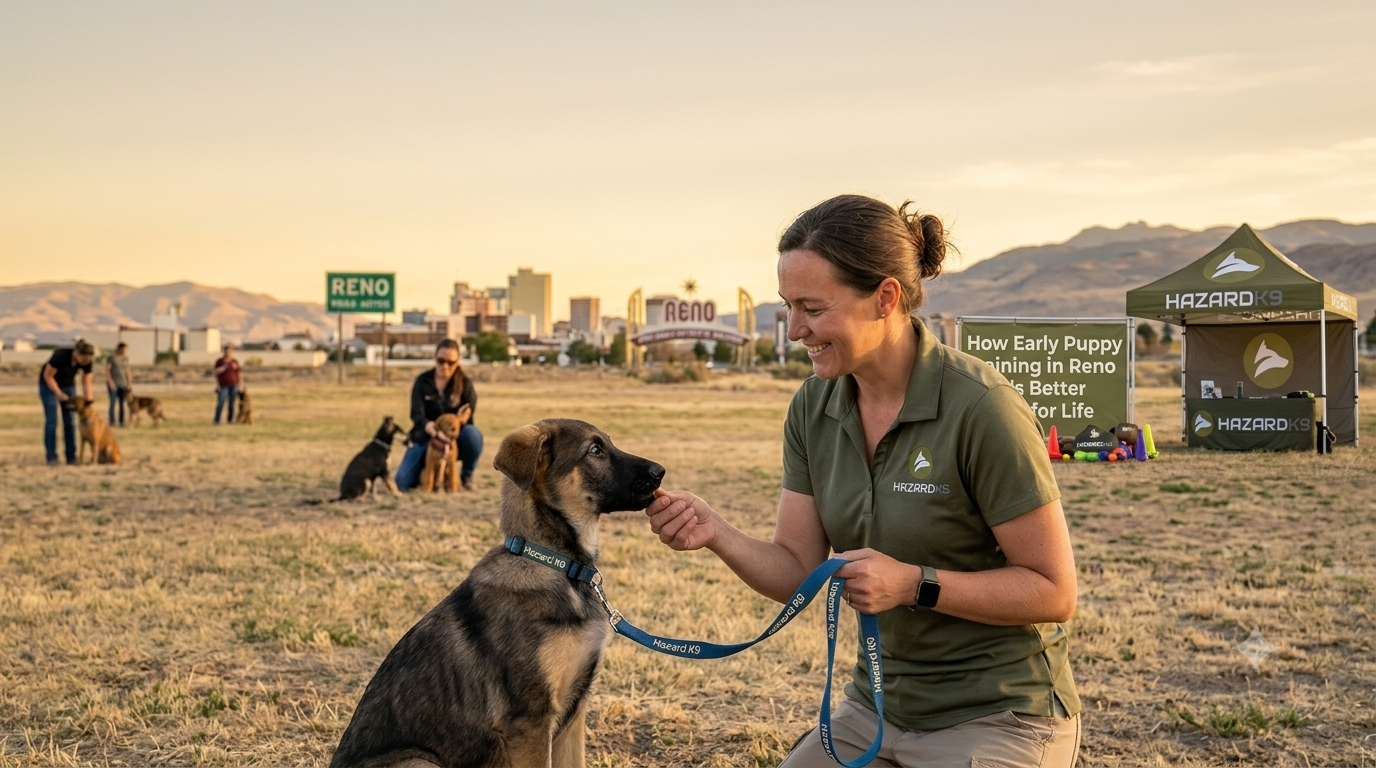
Bringing a new puppy into your Reno home is an exciting experience, but the first few months also provide an important opportunity to establish lifelong habits. Puppies are naturally curious, energetic, and eager to interact with the world around them. Their early experiences can influence how they respond to people, animals, unfamiliar environments, and everyday situations as they mature. Consistent training gives puppies clear expectations while helping them understand which behaviors are appropriate. Starting early can also prevent small behavioral concerns from becoming more difficult patterns later in life. We focus on building practical habits that help puppies become confident, responsive, and well mannered companions.
Puppies Learn Through Repetition
Young puppies are constantly observing their surroundings and learning from the consequences of their actions. When a puppy receives consistent guidance, repeated experiences help create predictable behavioral patterns. Simple routines such as responding to their name, waiting calmly, coming when called, and settling in a designated area can become natural over time. Repetition is particularly important because puppies do not automatically understand what their owners expect from them. Training provides opportunities to reinforce desirable behavior before unwanted habits become established. The earlier these lessons begin, the easier it can be to create a foundation for future obedience and communication.
Building Reliable House Training Habits
House training is one of the first major challenges many new puppy owners face. Establishing a consistent schedule helps puppies understand when and where they should relieve themselves. Taking a puppy outside after waking, eating, playing, and sleeping can create useful associations between daily routines and appropriate bathroom behavior. Positive reinforcement can also help puppies recognize that eliminating in the correct location produces a rewarding outcome. Accidents are a normal part of puppy development, so patience and consistency are essential during this stage. With structured guidance, house training can become a manageable process that develops into a dependable household habit.
Teaching Puppies to Respond to Their Names
A puppy learning to respond to its name is developing one of the most important foundations for communication. Owners can begin by saying the puppy's name in a positive tone and rewarding attention when the puppy looks toward them. Short and frequent practice sessions are generally easier for young dogs because puppies have limited attention spans. Over time, the puppy can learn that hearing its name means paying attention to the person communicating with it. This skill becomes especially useful when introducing recall, leash manners, and other obedience exercises. Hazard K9 helps owners understand how early communication exercises can become reliable behaviors through consistent practice.
Developing Better Impulse Control
Puppies often react immediately to exciting sights, sounds, smells, toys, food, and people. Learning to pause before acting helps them develop impulse control that becomes increasingly valuable as they grow. Simple exercises such as waiting for food, sitting before going through a doorway, and remaining calm when greeting someone can teach patience. These behaviors are not about suppressing a puppy's natural personality or energy. Instead, they teach the puppy how to manage excitement while still receiving appropriate opportunities to explore and interact. Strong impulse control can make everyday situations safer, calmer, and easier for both dogs and their owners.
Creating Positive Social Experiences
Early socialization can help puppies become more comfortable with different people, environments, surfaces, sounds, and everyday experiences. Reno offers a variety of surroundings that can provide useful opportunities for puppies to encounter new sights and sounds in controlled ways. The goal should be to introduce new experiences gradually while allowing the puppy to remain comfortable and confident. Forcing a frightened puppy into an overwhelming situation can create negative associations rather than healthy confidence. Calm exposure combined with positive reinforcement can help puppies learn that unfamiliar experiences do not automatically represent a threat. Proper socialization therefore becomes an important part of developing adaptable behavior for adulthood.
Teaching Calm Greetings
Many puppies become extremely excited when visitors arrive or when they encounter people during walks. Jumping, barking, pulling, and excessive excitement may seem harmless when a puppy is small, but these behaviors can become difficult when the dog reaches full size. Teaching calm greetings from an early age gives puppies an alternative way to interact with people. Rewarding four paws on the floor, relaxed body language, and attention toward the handler can reinforce appropriate greetings. Consistency is important because puppies quickly learn which behaviors receive attention from the people around them. Early practice can make polite greetings a normal part of the dog's everyday behavior.
Establishing Leash Manners Early
Walking on a leash is a practical skill that most dogs will use throughout their lives. Puppies naturally want to investigate everything around them, which can make pulling and wandering common during early walks. Introducing leash training gradually helps puppies learn that walking beside their handler can be rewarding and comfortable. Short training sessions can focus on attention, loose leash movement, changes in direction, and responding to simple cues. These skills can later make neighborhood walks, outings, veterinary visits, and public activities easier to manage. Early leash training can therefore provide both behavioral benefits and greater freedom for future adventures.
Preventing Unwanted Behaviors
Puppies may develop behaviors such as excessive chewing, jumping, barking, nipping, counter surfing, or stealing objects when they do not have appropriate alternatives. Addressing these behaviors early gives owners an opportunity to teach what the puppy should do instead. Providing suitable toys, rewarding calm behavior, and redirecting inappropriate actions can help establish clearer boundaries. Waiting until a puppy becomes an adult can make some habits more deeply established and harder to change. Early training allows owners to address behavior while puppies are still developing their understanding of household expectations. Our approach emphasizes practical alternatives that help puppies succeed instead of relying only on correction.
Building Confidence Around Everyday Situations
Confidence is an important component of a well adjusted adult dog. Puppies encounter many experiences during their early development, including vehicles, household appliances, unfamiliar surfaces, visitors, grooming, veterinary handling, and outdoor environments. Introducing these situations gradually can help puppies learn to remain composed when something unfamiliar occurs. Confidence does not mean forcing a puppy to tolerate everything immediately, but rather creating controlled experiences where the puppy can learn at a comfortable pace. Positive associations can help reduce unnecessary fear and encourage more adaptable responses. Consistent early exposure can prepare dogs to handle everyday changes with greater stability as they mature.
Helping Families Become Consistent
Successful puppy training is not only about teaching the dog because owners also need to understand how their responses influence behavior. If one person allows a behavior while another consistently discourages it, the puppy can receive confusing signals. Establishing common rules for feeding, jumping, furniture access, greetings, play, and obedience creates clearer expectations. Everyone in the household should understand which behaviors are rewarded and how unwanted behaviors should be redirected. Consistency makes learning easier because puppies can identify predictable patterns in their environment. Hazard K9 works with owners to make training practical enough to become part of everyday family life.
Supporting Long Term Obedience
Early puppy training creates a foundation that can support more advanced obedience as the dog matures. Once a puppy understands basic communication, attention, boundaries, and reinforcement, new commands can be introduced more effectively. Skills such as sit, stay, down, recall, place, and leash walking can become building blocks for more complex training. Continuing to reinforce these behaviors helps prevent learned skills from disappearing as the puppy grows older. Training should evolve with the dog's age, temperament, environment, and individual needs. A strong foundation gives owners a better starting point for maintaining reliable behavior throughout the dog's life.
Making Training Part of Everyday Life
The most effective puppy training does not have to happen only during formal sessions. Everyday activities can become opportunities to reinforce patience, attention, manners, and communication. Asking a puppy to sit before meals, wait before going outside, or focus before receiving a toy can turn ordinary routines into valuable learning experiences. Short periods of practice throughout the day can be easier for puppies to handle than long sessions that create frustration or fatigue. The important factor is maintaining clear expectations while keeping learning positive and manageable. Over time, these small interactions can develop into habits that naturally fit into the dog's daily routine.
Growing Together Through Training
Early training benefits both puppies and the people responsible for raising them. Puppies learn how to navigate their environment while owners learn how to communicate clearly and respond consistently. This shared learning process can strengthen trust and create a more predictable relationship between the dog and the family. Training also gives owners a better understanding of their puppy's personality, motivation, energy level, and individual challenges. As communication improves, everyday interactions can become less frustrating and more rewarding. With guidance from Hazard K9, Reno families can give their puppies the structure and skills needed to develop into confident, responsive, and well behaved adult dogs.
