

How to Prepare a Reno Puppy for Seasonal Changes, Heat, and Snow
Understanding Reno’s Changing Seasons
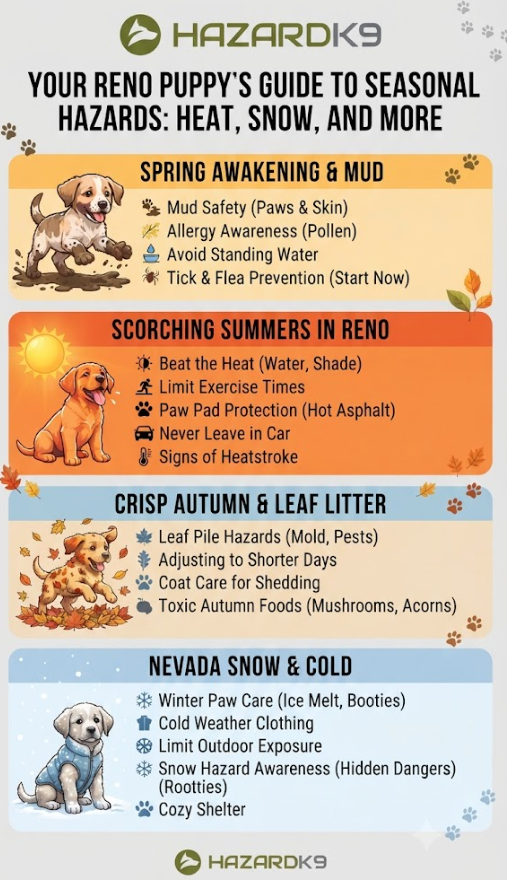
Reno puppies experience a wide range of seasonal conditions, from hot and dry summer days to cold winter temperatures and occasional snow. Because young dogs are still developing their ability to regulate body temperature, sudden weather changes can be more challenging for them than for adult dogs. Preparing your puppy for different seasons involves adjusting exercise routines, sleeping arrangements, grooming habits, hydration, and outdoor exposure. Puppies also need time to gradually become comfortable with unfamiliar environmental conditions rather than being exposed to extreme temperatures for long periods. At Hazard K9, we believe seasonal preparation should begin early so puppies can develop safe and comfortable habits throughout the year. Understanding how temperature, sunlight, wind, snow, and dry air affect your puppy is an important part of responsible ownership.
Preparing Your Puppy for Hot Weather
Reno summers can bring intense sunshine and high temperatures, making heat management particularly important for young puppies. Plan outdoor activities during cooler parts of the day, such as early morning or later evening, instead of taking your puppy out during the hottest afternoon hours. Always provide access to fresh, clean water both indoors and outdoors so your puppy can stay hydrated throughout the day. A shaded resting area is also important because direct sunlight can quickly make outdoor spaces uncomfortable for a young dog. Watch your puppy closely for excessive panting, weakness, unusual drooling, or reluctance to continue exercising, as these can indicate that the puppy is struggling with the heat. If your puppy shows serious signs of overheating, move them to a cooler environment and contact a veterinarian promptly.
Creating a Cool Indoor Environment
A comfortable indoor environment can make a significant difference during Reno’s warmer months. Keep your puppy in a well ventilated area where they can move away from direct sunlight and find a cooler place to rest. Cooling mats designed specifically for dogs can provide an additional comfortable surface, although puppies should always be supervised when using new products. Avoid placing a puppy bed directly beside a sunny window because indoor temperatures can become surprisingly high even when the rest of the room feels comfortable. During particularly hot periods, consider limiting strenuous play indoors as well because energetic puppies can overheat even without being outside. Our approach at Hazard K9 is to combine controlled activity with comfortable rest so puppies learn to remain calm and safe when temperatures rise.
Protecting Puppy Paws During Summer
Hot outdoor surfaces can pose a risk to puppy paws even when the surrounding air temperature does not seem extreme. Pavement, asphalt, concrete, and other hard surfaces can become significantly hotter than the surrounding environment under direct sunlight. Before taking your puppy for a walk, check the surface temperature by placing the back of your hand against it for several seconds. If the surface is too hot for your hand, choose a cooler route or postpone the walk until temperatures drop. Grass and shaded areas can provide safer alternatives for short outdoor sessions during hotter periods. Gradually introducing your puppy to different surfaces can also help build confidence while allowing you to monitor how their paws respond.
Preparing for Cooler Autumn Temperatures
Autumn provides an excellent opportunity to gradually prepare a Reno puppy for colder conditions before winter arrives. As temperatures begin dropping, continue outdoor activities while paying attention to how your puppy reacts to cooler air, wind, and changing ground conditions. Puppies with short coats, smaller bodies, or lower body fat may become uncomfortable sooner than larger or heavily coated dogs. A comfortable indoor sleeping area away from cold drafts can help your puppy maintain a stable body temperature after outdoor activities. Autumn is also a useful time to check bedding, outdoor gear, grooming supplies, and other items before colder weather becomes more demanding. Introducing seasonal changes gradually can help your puppy become comfortable without creating unnecessary stress.
Introducing Your Puppy to Snow
Snow can be exciting for a puppy, but the unfamiliar texture and cold temperature may initially make some young dogs hesitant. Allow your puppy to investigate snow gradually rather than immediately encouraging long walks or extended outdoor play. Keep early sessions short and observe whether your puppy is comfortable walking, standing, and moving through the snow. Snow can also conceal uneven ground, sharp objects, ice, or other hazards, so supervised exploration is essential. After coming indoors, dry your puppy thoroughly and check their paws for accumulated snow, ice, salt, or other irritating materials. At Hazard K9, we recommend treating snow exposure as a gradual learning experience that combines confidence building with careful temperature management.
Keeping Your Puppy Warm in Winter
Young puppies can lose body heat more quickly than adult dogs, particularly during prolonged exposure to cold weather. Provide a warm, dry sleeping area indoors where your puppy can rest comfortably after outdoor activities. If your puppy needs additional winter clothing, choose properly fitted garments that allow normal movement without restricting breathing or causing overheating indoors. Outdoor sessions should generally be shorter during very cold conditions, especially when wind or wet snow makes the environment feel colder. Pay attention to signs of discomfort such as shivering, lifting paws repeatedly, slowing down, whining, or trying to return indoors. Your puppy should always have the opportunity to end an outdoor session when the conditions become uncomfortable.
Protecting Paws From Ice and Winter Chemicals
Winter walks can expose puppy paws to ice, packed snow, road salt, and deicing chemicals that may irritate the skin or cause problems if licked. After every winter outing, inspect your puppy’s paws carefully and remove any snow, ice, debris, or residue that has accumulated between the toes. Keeping the hair around the paw pads appropriately maintained can make it easier to identify and remove trapped material. A veterinarian can also recommend suitable paw protection products if your puppy regularly encounters harsh winter surfaces. Avoid allowing your puppy to lick unknown substances from sidewalks, driveways, or roads because some winter products can be harmful when swallowed. Regular paw checks help turn winter walks into a safer and more comfortable experience.
Adjusting Exercise Throughout the Year
A puppy still needs regular physical activity when temperatures change, but the duration and timing of exercise may need to be adjusted. During hot weather, shorter activities during cooler periods can be more appropriate than lengthy midday walks. During winter, several shorter outdoor sessions may be preferable to one extended period of exposure to freezing temperatures or snow. Indoor training, scent games, controlled play, and basic obedience exercises can provide valuable mental stimulation when outdoor conditions are unsuitable. Maintaining a consistent training routine can also help your puppy remain engaged even when seasonal weather limits outdoor activity. We focus on balanced routines that give puppies opportunities to exercise, learn, rest, and adapt without placing unnecessary physical demands on them.
Recognizing Seasonal Health Concerns
Seasonal preparation also means learning to recognize when normal adjustment has become a potential health concern. Heat related problems can develop quickly, while prolonged cold exposure can lead to dangerous drops in body temperature. Puppies may also encounter seasonal hazards such as standing water, unfamiliar plants, ice, wildlife, insects, and chemicals used around roads or properties. Changes in appetite, energy, breathing, movement, or behavior should be taken seriously, particularly when they occur after exposure to extreme weather. When you are uncertain whether your puppy is responding normally to environmental conditions, contacting your veterinarian is the safest course of action. Early attention to unusual symptoms can help prevent a minor seasonal concern from developing into a more serious problem.
Building Year Round Confidence
Helping a Reno puppy adapt to seasonal changes is not simply about keeping them warm in winter or cool in summer. It is also about teaching them that different temperatures, surfaces, sounds, smells, and outdoor environments can be approached calmly and safely. Introduce new conditions gradually and pair appropriate experiences with positive reinforcement so your puppy can develop confidence without becoming overwhelmed. Keep outdoor sessions supervised and adjust them according to the actual weather rather than following the same routine throughout the year. With patience and consistency, your puppy can become more comfortable experiencing everything from sunny summer walks to snowy winter adventures. Hazard K9 encourages owners to make seasonal preparation part of their puppy’s overall training routine so comfort, safety, and confidence develop together.
