

Why Reno’s High-Desert Environment Can Change the Way Puppies Respond to Board and Train Programs
Understanding Reno’s Distinctive Environment
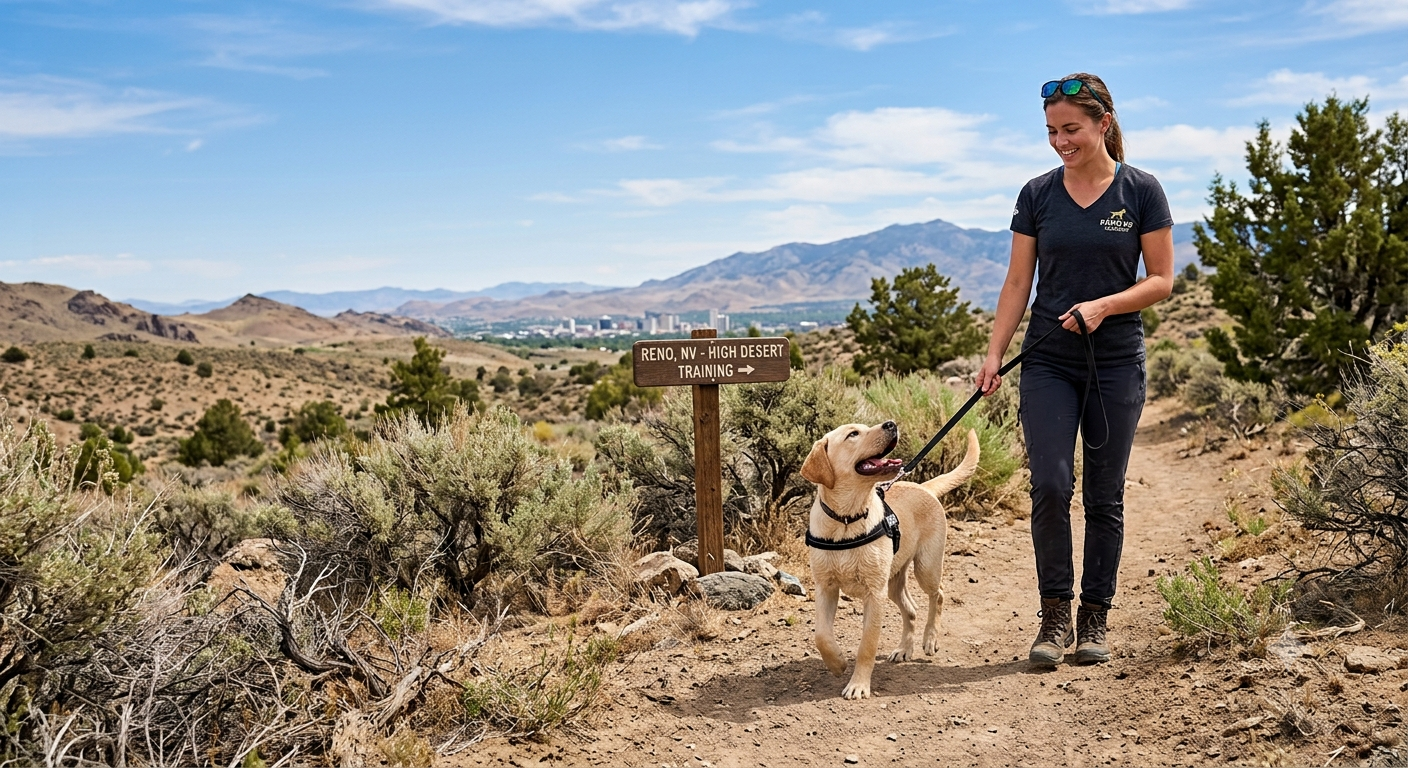
Reno’s high-desert environment creates a setting that can influence how puppies experience training, socialization, exercise, and changes in routine. The region combines relatively dry air, strong seasonal temperature variations, intense sunlight, and a landscape that can feel very different from more humid or densely developed environments. For a young dog, these environmental differences can affect energy levels, attention, hydration needs, and overall comfort during a training program. Puppies are still developing physically and emotionally, so their ability to adapt to unfamiliar surroundings can be more limited than that of mature dogs. A board and train program therefore needs to account for more than obedience exercises and behavioral expectations. At Hazard K9, we recognize that understanding the environment surrounding a puppy can be an important part of creating a thoughtful and effective training experience.
Why Puppies React Differently Than Adult Dogs
Puppies are naturally more sensitive to changes in their surroundings because their nervous systems and behavioral patterns are still developing. A new location can introduce unfamiliar sounds, smells, surfaces, people, dogs, schedules, and expectations all at once. When those changes occur alongside Reno’s distinctive climate, some puppies may require additional time to settle into their new routine. A puppy that appears energetic at home may initially become quieter, distracted, restless, or hesitant in a new training environment. These reactions do not necessarily indicate poor temperament or a lack of willingness to learn. They can simply reflect the normal adjustment process associated with development, novelty, and environmental stimulation.
The Role of Dry High-Desert Air
Dry air is one of the defining characteristics of Reno’s high-desert climate, and it can influence a puppy’s comfort during daily activities. Puppies may need consistent access to fresh water, particularly when they are active, playing, walking, or participating in structured training sessions. Dry conditions can also make physical exertion feel different compared with environments where humidity is considerably higher. A young dog may therefore show changes in activity levels or require more frequent opportunities to rest between exercises. Trainers need to observe the individual puppy rather than assuming that every dog will respond to the environment in the same way. Maintaining appropriate hydration and recognizing signs of fatigue can help create a safer and more productive training routine.
Temperature Changes Can Affect Training Sessions
Reno can experience significant temperature differences between seasons and between different parts of the day. Puppies are not miniature adult dogs, and their ability to regulate body temperature is still developing, which makes environmental conditions particularly relevant during physical activities. Training schedules may need to be adjusted according to outdoor temperatures, sun exposure, and the puppy’s individual tolerance for exercise. A session that works well during a cool morning may not be appropriate during the hottest part of the afternoon. Likewise, colder conditions can create a different set of challenges for young dogs that are still becoming accustomed to outdoor experiences. Effective training is therefore not simply about completing a predetermined routine but about adapting that routine to the puppy and the conditions.
Sunlight and Outdoor Stimulation
The strong sunlight commonly associated with high-desert regions can also contribute to the sensory experience a puppy encounters during training. Bright outdoor environments can introduce visual stimulation that differs from what a puppy experiences inside a home or shaded neighborhood setting. Moving shadows, reflective surfaces, changing temperatures, and unfamiliar outdoor sounds can all compete for a young dog’s attention. Puppies that are easily distracted may initially struggle to maintain focus when these environmental factors are present. Gradual exposure can help them learn that interesting surroundings do not always require an immediate reaction. Over time, this can contribute to improved impulse control and better engagement with training cues.
High-Desert Terrain and Paw Sensitivity
The physical surfaces found around Reno can also influence a puppy’s experience during outdoor training. Gravel, dry soil, rocky areas, pavement, and other textured surfaces may feel unfamiliar to a puppy that has primarily walked on grass, carpet, or smooth flooring. Young dogs can be particularly cautious when encountering new textures because they are still developing confidence in navigating their surroundings. Introducing different surfaces gradually can help prevent uncertainty from becoming avoidance behavior. It also gives puppies opportunities to develop body awareness, coordination, and confidence in varied environments. Trainers can use these experiences as controlled learning opportunities rather than expecting a puppy to immediately behave comfortably on every surface.
How Environmental Novelty Influences Attention
A puppy entering a board and train program may already be processing many new experiences before formal training even begins. New scents, unfamiliar dogs, different voices, new sleeping arrangements, and a structured schedule can create substantial mental stimulation. Reno’s outdoor environment can add another layer of novelty through open spaces, dry vegetation, wildlife scents, wind patterns, and distinctive terrain. When a puppy is surrounded by new information, its ability to concentrate on a particular command may temporarily decrease. This does not mean the puppy is incapable of learning, but it can mean that training needs to begin with manageable expectations. Building focus in gradually more stimulating environments can help the puppy learn how to respond to its handler even when distractions are present.
The Importance of Gradual Acclimation
A successful board and train experience should not assume that every puppy will immediately adapt to a new setting. Gradual acclimation allows a young dog to become familiar with its surroundings while learning what behaviors are expected. This can include establishing predictable feeding, rest, potty, play, and training routines so that the puppy begins to understand what comes next. Predictability can be especially valuable when the dog is experiencing multiple environmental changes at the same time. Once the puppy becomes more comfortable, trainers can gradually increase the complexity and intensity of training situations. This approach can support confidence while reducing the likelihood that excessive stimulation will interfere with learning.
Rest Is Part of the Training Process
Puppies require substantial rest because their bodies and brains are developing rapidly. A board and train program that focuses exclusively on activity may overlook the importance of recovery and mental decompression. Training itself can be tiring because puppies are constantly learning new associations, processing information, practicing behaviors, and adapting to unfamiliar surroundings. High temperatures, dry conditions, and physically demanding activities can increase the importance of appropriate rest periods. Giving a puppy time to sleep and relax can help prevent unnecessary fatigue from being mistaken for stubbornness or behavioral resistance. A balanced routine should therefore treat rest as an essential component of learning rather than as wasted training time.
Socialization in a High-Desert Setting
Socialization involves much more than allowing a puppy to interact with other dogs. It also involves teaching a young dog how to remain calm and confident around people, sounds, surfaces, environments, movement, and everyday experiences. Reno provides opportunities for puppies to encounter a variety of environmental conditions that can contribute to broader socialization when introduced appropriately. However, exposure should be controlled rather than overwhelming because excessive stimulation can create fear or frustration. Trainers need to observe body language and adjust the intensity of an experience according to the puppy’s response. Properly managed exposure can help puppies develop the ability to investigate new situations without immediately becoming overstimulated.
Building Confidence Through Controlled Challenges
Confidence is particularly important for puppies because uncertainty can influence how they respond to new environments. A puppy that feels overwhelmed may freeze, retreat, bark, pull away, or become excessively excited when faced with something unfamiliar. Controlled challenges allow the puppy to experience novelty while maintaining a sense of security and predictability. Training can then reinforce calm exploration, appropriate engagement, and responsiveness to cues. Each successful experience can become part of the puppy’s growing behavioral history and help shape future reactions. Over time, these small successes can contribute to a dog that approaches unfamiliar situations with greater composure.
Why Individual Temperament Still Matters
Although Reno’s climate and environment can influence a puppy’s experience, environmental factors are only one part of the equation. Every puppy has its own temperament, developmental stage, previous exposure, energy level, motivation, and learning history. Two puppies living in the same household can respond completely differently to the same board and train environment. One may quickly explore new surroundings while another may need considerably more time before becoming comfortable. A thoughtful training program accounts for these individual differences rather than applying exactly the same expectations to every dog. Observing the puppy’s behavior and adjusting training accordingly can make the process more effective and more appropriate for the individual animal.
Establishing Consistency During Board and Train
Consistency is one of the most important factors in helping puppies understand new expectations. Clear routines can make unfamiliar environments easier to navigate because the puppy begins to recognize predictable patterns throughout the day. Consistency should extend across training cues, reinforcement, boundaries, rest periods, feeding routines, and appropriate interactions. When expectations change constantly, a young dog may have difficulty understanding which behaviors are desirable. When expectations remain clear, repetition gives the puppy opportunities to build reliable associations. The goal is to create learning experiences that can eventually transfer from the training environment into the puppy’s everyday home life.
Preparing Puppies for Life Beyond Training
A board and train program should ultimately prepare a puppy for real-world situations rather than simply producing obedience within a controlled facility. Reno’s environmental characteristics can provide useful opportunities to practice attention, leash manners, impulse control, calm behavior, and responsiveness around distractions. These skills become more meaningful when puppies can apply them across different locations and circumstances. The transition home is especially important because puppies must continue using what they learned after the structured program ends. Owners play an important role in maintaining consistent expectations and reinforcing appropriate behaviors. When training principles are carried into everyday routines, the puppy has a better opportunity to turn learned behaviors into lasting habits.
Recognizing Stress Versus Normal Adjustment
It is important to distinguish normal adjustment behavior from signs that a puppy is experiencing excessive stress. Some hesitation, increased sleep, temporary distraction, or mild uncertainty can occur when a young dog enters an unfamiliar environment. More concerning changes may involve persistent fear, inability to settle, significant withdrawal, unusual changes in appetite, or other behavioral changes that do not improve with appropriate support. Careful observation allows trainers to determine whether a puppy simply needs more time or whether the training environment needs to be modified. Communication with owners is also valuable because they can provide information about the puppy’s normal behavior and previous experiences. A responsible approach prioritizes the puppy’s welfare while still maintaining clear behavioral goals.
Making the Environment Part of the Learning Experience
The most effective puppy training does not attempt to eliminate every distraction or environmental challenge. Instead, it teaches the puppy how to respond appropriately when distractions exist. Reno’s high-desert setting can therefore become part of a broader learning process when exposure is carefully managed. Puppies can gradually learn to maintain attention despite unfamiliar surfaces, outdoor sounds, changing weather conditions, and new surroundings. This can help develop practical skills that are difficult to establish when training occurs only in predictable indoor environments. Environmental variety can become a valuable training tool when introduced at a pace that matches the puppy’s developmental readiness. At Hazard K9, we focus on creating structured experiences that help puppies learn how to navigate real-world environments with greater confidence and control.
Creating a More Adaptive Puppy
The ultimate objective of a board and train program is not simply to teach a collection of commands. It is to help a puppy develop the ability to understand expectations, manage distractions, respond to guidance, and remain composed in different situations. Reno’s high-desert environment can introduce challenges that make this process more nuanced, particularly for puppies that have limited experience with environmental variation. When climate, terrain, stimulation, exercise, rest, and temperament are considered together, training can become more individualized and purposeful. A puppy that learns to adapt gradually may be better prepared for the wide range of situations it will encounter throughout its life. This adaptability can support better communication between dogs and their owners while providing a stronger foundation for future training.
Supporting the Transition Home
The end of a board and train program is not the end of a puppy’s education. Returning home introduces another transition because the puppy must apply learned behaviors in a familiar environment with different routines, people, distractions, and expectations. Owners should understand the cues, boundaries, reinforcement strategies, and daily practices that have been used during training. Consistent follow-through helps prevent confusion and gives the puppy opportunities to strengthen newly learned behaviors. The home environment may also contain distractions that were not present during training, so continued practice is important. With patience and consistency, the skills developed during a structured program can become part of the puppy’s everyday behavior.
A Climate-Aware Approach to Puppy Training
Reno’s high-desert environment does not determine how a puppy will behave, but it can influence the conditions under which learning takes place. Dry air, strong sunlight, temperature changes, varied terrain, and environmental novelty can all affect a young dog’s comfort and ability to concentrate. Recognizing these factors allows training to become more responsive to the puppy rather than relying on a rigid routine. Appropriate hydration, rest, gradual exposure, environmental management, and individualized expectations can all contribute to a more balanced experience. The result can be a puppy that learns not only what to do but also how to remain composed when circumstances change. At Hazard K9, we believe understanding the environment is an important part of understanding the dog, and that perspective can help create a stronger foundation for lifelong behavior and training.
