

What Happens When a Puppy’s Home Habits Follow Them Into a Reno Board and Train Program?
Understanding Why Home Habits Matter in Puppy Training
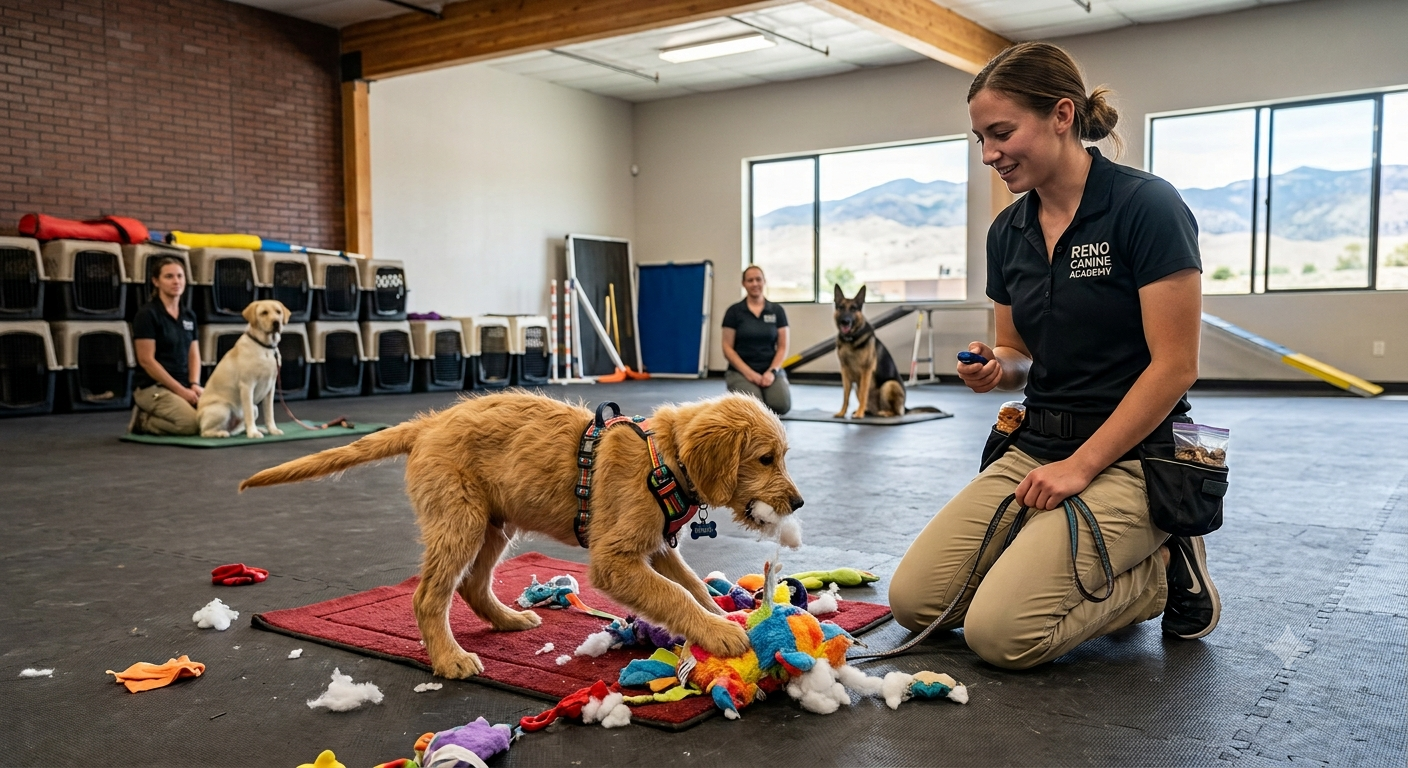
When a puppy enters a Reno board and train program, they do not arrive as a blank slate. Every puppy brings a collection of habits, routines, expectations, and learned responses from their home environment. Some of these behaviors may be helpful, while others may create challenges during structured training. A puppy that jumps on people at home may initially attempt the same behavior with trainers, staff, or other people they encounter during the program. A puppy that has learned to bark for attention may also expect barking to produce interaction, food, access, or play. We begin by understanding these existing patterns because recognizing what a puppy has already learned provides an important foundation for determining how training should progress.
Puppies Learn From Their Everyday Environment
A puppy's behavior is heavily influenced by what happens around them every day. If a puppy receives attention whenever they paw at someone, climb onto furniture, or demand interaction, those behaviors can become reinforced over time. The same principle applies to feeding routines, sleeping arrangements, door manners, leash behavior, play sessions, and responses to household distractions. Puppies are constantly observing what produces a desired outcome and adjusting their behavior accordingly. When they enter a structured environment, their previous expectations may initially conflict with the new routines being introduced. This is why we pay close attention to the behaviors a puppy has practiced repeatedly before arriving at our training program.
What Happens When Home Habits Appear During Training?
One of the most interesting parts of a board and train experience is seeing familiar home behaviors emerge in a completely different setting. A puppy that appears calm during the first few hours may begin testing boundaries once they become comfortable with their surroundings. Another puppy may immediately demonstrate habits such as jumping, pulling, excessive barking, counter surfing, chewing, or ignoring basic cues. These behaviors are not necessarily signs that the puppy is refusing to learn, because they often reflect patterns that have previously been successful for them. A new environment simply gives trainers an opportunity to observe those patterns without the usual household circumstances surrounding them. At Hazard K9, we use these observations to understand the puppy's behavioral tendencies and establish appropriate training strategies.
Familiar Behaviors Can Reveal Important Training Gaps
A puppy's habits can provide valuable information about what they have learned and what they have not yet learned. For example, a puppy may understand a command in a quiet room but struggle to respond when another person, dog, sound, or movement is present. A puppy may also understand that sitting earns attention but have no understanding that the same calm behavior should be expected when visitors arrive. These differences often reveal a lack of generalization rather than a lack of intelligence or willingness. Puppies need opportunities to practice learned behaviors across different environments and circumstances so those behaviors become more reliable. Identifying these gaps during a board and train program allows training to address the underlying consistency issue rather than simply repeating commands.
The Difference Between Home Rules and Training Rules
Many puppies struggle when the expectations at home are different from the expectations introduced during structured training. A puppy might be allowed on the couch at home but be expected to remain on the floor during certain training exercises. Another puppy may receive treats whenever they become excited, while training sessions may emphasize calm behavior before rewards are provided. Neither situation automatically means that the puppy has been badly trained, because households naturally develop their own routines and preferences. The challenge occurs when a puppy receives inconsistent feedback about which behaviors are acceptable in different circumstances. We help establish clearer expectations so the puppy can begin understanding what behavior produces reinforcement and what behavior does not.
Why Consistency Is Critical After Board and Train
A board and train program can create significant progress, but the puppy's behavior will continue to depend on what happens after they return home. Puppies are highly adaptable, which means they can quickly return to old patterns if those patterns begin producing rewards again. If jumping previously resulted in attention and the behavior receives attention again after training, the puppy may learn that jumping still works in certain situations. Similarly, if a puppy is expected to wait calmly before receiving food during training but is fed immediately after demanding attention at home, mixed signals can develop. Consistency helps the puppy understand that the behaviors practiced during training also apply to everyday life. For this reason, owner participation and continued reinforcement are important parts of maintaining meaningful behavioral progress.
Board and Train Provides a Structured Learning Environment
A structured environment gives puppies opportunities to practice appropriate behavior throughout their daily routine. Instead of limiting training to a short session once or twice a day, many aspects of the puppy's routine can become learning opportunities. Walking, resting, interacting with people, responding to cues, transitioning between activities, and managing distractions can all contribute to a puppy's development. Structure also reduces the number of opportunities for unwanted behavior to become accidentally reinforced. Over time, the puppy begins to experience predictable consequences for different choices. At Hazard K9, our goal is to make training part of the puppy's broader routine so learning extends beyond isolated command exercises.
Puppies May Test Boundaries When They Become Comfortable
It is common for a puppy to behave differently after becoming familiar with a new environment. Some puppies initially appear cautious and reserved before becoming more energetic and confident. Once that confidence develops, previously hidden behaviors may become more obvious. A puppy might begin testing whether jumping receives attention, whether pulling changes the direction of a walk, or whether barking produces interaction. These moments are useful because they provide insight into the puppy's decision making and learned expectations. Addressing these behaviors consistently helps the puppy understand that becoming comfortable does not mean that previously established boundaries disappear.
Social Habits Can Follow Puppies Into New Environments
Social behavior is another area where home habits can become visible during a board and train program. A puppy that constantly receives unrestricted attention from family members may expect every person they meet to provide immediate interaction. A puppy that has limited exposure to different people, sounds, environments, or other dogs may also need additional opportunities to build confidence and appropriate social responses. Training should not simply focus on making a puppy friendly, because appropriate social behavior also involves impulse control, neutrality, observation, and the ability to disengage. A puppy should learn that not every person or animal represents an invitation to become excited. Structured exposure can help create more balanced responses when social distractions are present.
Leash Behavior Often Reflects Home Routine
Walking habits are frequently shaped by whatever has been allowed or reinforced during everyday outings. If a puppy has learned that pulling moves them closer to an interesting smell, person, or object, pulling can become a powerful habit. If the handler regularly follows the puppy's direction, the puppy may begin believing that tension on the leash is an effective way to control movement. Board and train allows leash behavior to be practiced under more structured conditions where appropriate responses can be reinforced consistently. The puppy can learn that walking calmly provides access to movement and exploration without relying on constant pulling. Once these skills are established, continued practice at home becomes essential for making them dependable in ordinary situations.
Household Excitement Can Influence Puppy Behavior
The environment inside a home can strongly influence how a puppy responds to excitement. Loud greetings, children running through rooms, frequent visitors, household pets, doorbells, deliveries, and other daily events can create repeated opportunities for arousal. If a puppy has historically responded to these situations by barking, jumping, chasing, or racing around the house, those reactions can become deeply familiar. A structured training environment provides opportunities to teach the puppy that excitement does not automatically require an immediate reaction. Calmness, attention, and controlled transitions can become practiced alternatives. These skills are particularly valuable because the puppy eventually needs to demonstrate them in the same types of environments where the original habits developed.
The Role of Owners After Training
Owners play an important role in translating training progress into everyday life. A puppy may demonstrate excellent behavior during structured sessions but still need guidance when returning to familiar rooms, routines, people, and distractions. The owner must understand the expectations established during training and know how to reinforce them consistently. This does not mean that every interaction at home must become a formal training session. Instead, ordinary activities can provide opportunities to reinforce calm behavior, responsiveness, appropriate boundaries, and reliable routines. Our approach emphasizes practical skills that owners can continue applying as part of normal daily life.
Training Should Address More Than Individual Commands
Teaching a puppy to sit, down, stay, or come is useful, but obedience commands alone do not explain the entire behavioral picture. A puppy may know several commands while still struggling with impulse control, environmental distractions, frustration, or excessive excitement. Effective training considers how the puppy behaves before, during, and after a particular situation. It also considers what motivates the puppy and what consequences have historically influenced their choices. This broader perspective makes it possible to build behaviors that are useful beyond a training session. When the puppy learns how to make appropriate choices in different circumstances, obedience becomes part of a larger behavioral framework.
What Progress Can Look Like
Progress in a board and train program does not necessarily mean that every unwanted behavior disappears immediately. Puppies develop at different rates, and their behavior can change as they mature and encounter new experiences. Progress may appear as a puppy recovering more quickly from excitement, responding more consistently to known cues, walking with better leash manners, or choosing calmer behavior around distractions. A puppy may still make mistakes while demonstrating significantly improved recovery and responsiveness. These changes can be more meaningful than expecting flawless behavior in every situation. Our focus is on building practical behavioral skills that can continue developing through consistent reinforcement and appropriate expectations.
Bringing New Habits Back Home
The transition from a board and train environment back into the home is an important stage of the overall process. The puppy is returning to the exact environment where many of their original habits were created and reinforced. Family members, furniture, routines, sounds, visitors, other pets, and familiar distractions can all trigger old patterns. Owners should therefore expect a period of adjustment rather than assuming that training automatically makes every behavior permanent. Reinforcing the same expectations consistently helps the puppy understand that the skills learned during training continue to apply at home. Hazard K9 encourages owners to view the return home as the beginning of continued learning rather than the final step of training.
Why Early Habits Are Worth Addressing
Puppyhood is an important period for establishing behavioral patterns that can influence later development. Small habits can become increasingly difficult to manage when they are repeatedly practiced without consistent guidance. Jumping, pulling, excessive barking, inappropriate chewing, demand behaviors, and poor impulse control may appear manageable when a puppy is small but can become substantially more challenging as the dog grows. Addressing these patterns early provides an opportunity to establish clearer expectations before unwanted behaviors become deeply ingrained. Structured training can also help owners recognize which behaviors they may be unintentionally reinforcing. With appropriate guidance and consistency, puppies can develop stronger foundations for reliable behavior as they mature.
Creating Consistency Between Training and Home Life
The ultimate objective is not simply to make a puppy behave differently while they are away from home. The objective is to help create behaviors that remain useful when the puppy returns to everyday life. This requires communication between trainers and owners, realistic expectations, consistent reinforcement, and continued practice. When the rules at home support the lessons introduced during training, the puppy receives clearer information about what is expected. Over time, those expectations can become part of the puppy's normal routine rather than something that only happens during formal training. A Reno board and train program can provide the structure and foundation, while continued engagement at home helps transform that foundation into lasting behavior.
Helping Puppies Build Better Habits for the Future
A puppy's existing home habits are not simply obstacles to overcome during training. They are valuable information that can reveal how the puppy currently understands attention, boundaries, rewards, distractions, and daily routines. By identifying those patterns, trainers can create a more informed approach to building appropriate behavior. The most successful outcomes generally come from combining structured training with clear communication and consistent follow-through after the puppy returns home. Puppies do not need perfection to make meaningful progress, but they do need understandable expectations and repeated opportunities to make appropriate choices. With the right foundation, a puppy can move beyond familiar home habits and develop the confidence, responsiveness, and self-control needed to become a well-mannered companion.
