

The Benefits of Enrolling Puppies in a Structured Dog Training School in Reno
Why Early Puppy Training Shapes a Lifetime of Good Behavior
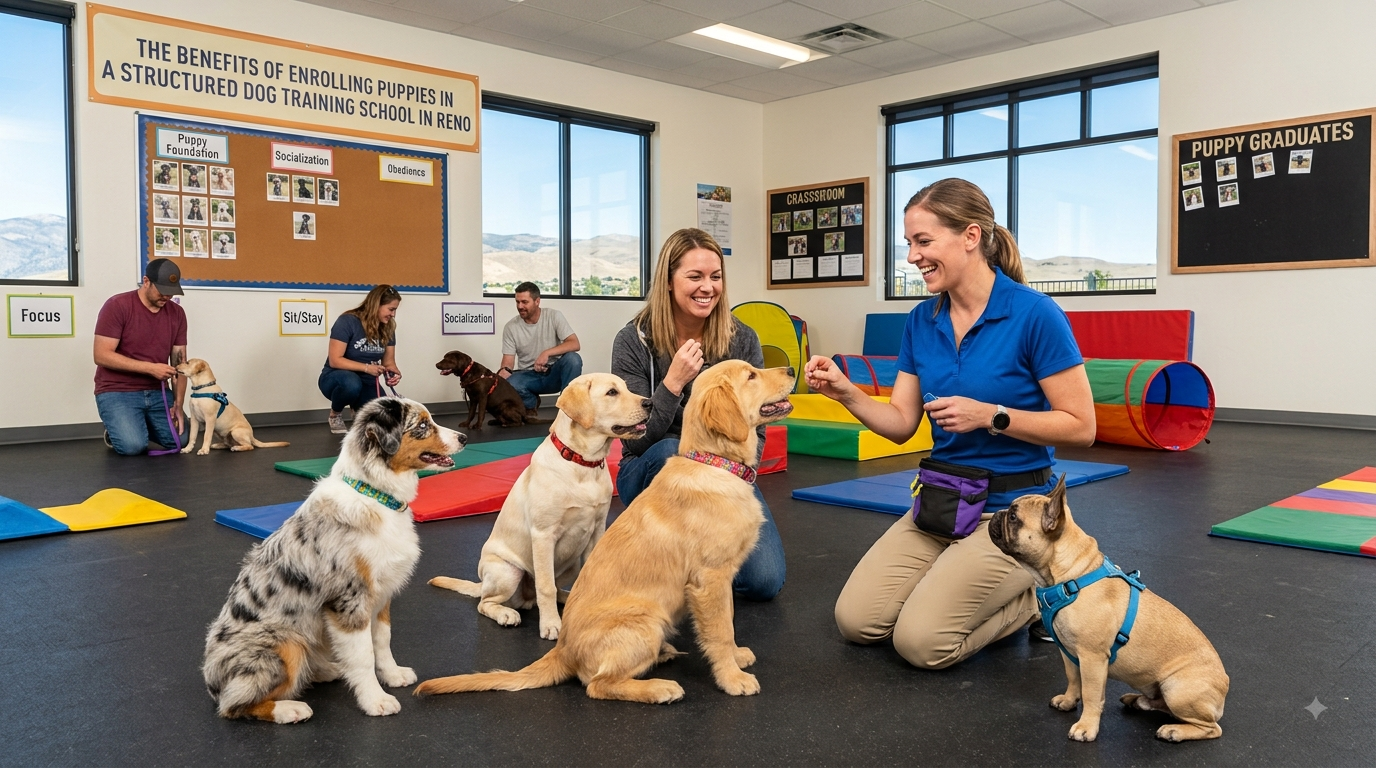
Bringing home a puppy is an exciting experience, but it also comes with the responsibility of teaching positive habits from the very beginning. Puppies learn rapidly during their first few months, making this the ideal time to introduce structure, boundaries, and healthy routines. Every interaction during this stage influences how they respond to people, other animals, and unfamiliar situations later in life. Without proper guidance, small behavioral issues can gradually develop into habits that become much harder to change as they grow. Enrolling your puppy in a structured dog training school in Reno creates an environment where learning is consistent, engaging, and designed to build confidence. We believe that early education provides the strongest foundation for raising a calm, reliable, and happy companion.
Building Strong Communication Between Puppies and Owners
One of the greatest advantages of structured puppy training is that it teaches both the dog and the owner at the same time. Many people assume that training focuses only on teaching commands, but successful programs also help owners understand how dogs communicate. Puppies constantly observe body language, tone of voice, and consistency in daily routines. Learning how to respond appropriately makes communication much clearer and reduces confusion for everyone involved. As trust develops through regular training sessions, puppies become more willing to follow guidance and remain attentive even in distracting environments. This stronger relationship creates a partnership built on respect rather than frustration.
Encouraging Positive Socialization From the Beginning
Proper socialization is one of the most valuable experiences a puppy can receive during early development. A structured dog training school introduces puppies to different people, sounds, environments, and carefully supervised interactions with other dogs. These positive experiences reduce fear and uncertainty while helping puppies become comfortable with everyday situations. Instead of reacting with anxiety or excitement, they gradually learn appropriate responses through repeated exposure. Puppies that receive healthy socialization often grow into adults who remain relaxed in parks, neighborhoods, veterinary clinics, and public spaces. This confidence benefits both the dog and the family throughout every stage of life.
Preventing Common Behavioral Problems Before They Develop
Many behavioral challenges begin as harmless puppy behaviors that are unintentionally reinforced over time. Jumping on guests, excessive barking, chewing household items, pulling on the leash, and ignoring recall commands can quickly become frustrating if they are not addressed early. Structured training focuses on replacing unwanted behaviors with appropriate alternatives while puppies are still eager to learn. Consistent reinforcement allows good habits to become part of everyday routines rather than temporary lessons. Early intervention is often much easier than correcting deeply established behaviors later in adulthood. Investing in professional guidance now can save owners considerable time, stress, and effort in the future.
Creating Confidence Through Structured Learning
Confidence is just as important as obedience when raising a well balanced puppy. Training introduces manageable challenges that encourage puppies to think, solve problems, and succeed in new situations. Every successful command, positive interaction, and rewarding experience builds emotional resilience. Rather than becoming fearful when faced with unfamiliar environments, confident puppies learn to observe, adapt, and remain calm. Structured lessons also prevent puppies from becoming overwhelmed because each skill is introduced at an appropriate pace. This steady progression helps create emotionally stable dogs that are prepared for everyday life.
Developing Reliable Obedience Skills
Basic obedience provides the framework for every future stage of training. Puppies begin by learning simple commands such as sit, stay, come, down, and walking politely on a leash. While these commands may appear simple, they establish important habits involving focus, impulse control, and responsiveness. Repetition in different environments teaches puppies that commands remain consistent regardless of distractions. Reliable obedience also makes daily activities much easier, whether visiting friends, traveling, or simply enjoying walks around Reno. A puppy that understands expectations can safely participate in more aspects of family life.
Improving Focus Despite Everyday Distractions
One of the biggest challenges for young puppies is maintaining attention when exciting sights, sounds, and smells compete for their curiosity. Structured training gradually introduces controlled distractions so puppies learn to remain engaged with their handler. Instead of becoming overwhelmed by everything happening around them, they develop the ability to concentrate and make better decisions. This improved focus carries over into real world situations including parks, busy sidewalks, pet friendly businesses, and neighborhood walks. Puppies that learn self control at an early age typically respond more reliably throughout adulthood. Consistent practice strengthens these important skills with every session.
Supporting Healthy Mental Development
Physical exercise alone is not enough to satisfy a growing puppy's needs. Puppies require mental stimulation that challenges their minds and encourages productive thinking. Training sessions introduce new tasks, problem solving exercises, and interactive learning opportunities that keep young dogs engaged. Mental enrichment helps reduce boredom, which is often a major cause of destructive behaviors inside the home. As puppies become mentally fulfilled, they are more likely to relax calmly between activities rather than constantly seeking entertainment through unwanted behaviors. Structured education supports both emotional and cognitive development in meaningful ways.
Creating Consistency Across Daily Routines
Dogs thrive when expectations remain clear and predictable. A structured training school reinforces routines that owners can continue practicing at home every day. Consistent schedules for rewards, commands, and expectations help puppies understand what behaviors are encouraged. When everyone in the household follows similar training methods, puppies learn much more quickly because the rules remain the same regardless of who is interacting with them. This consistency minimizes confusion and allows learning to progress steadily. Over time, these daily habits become second nature for both the puppy and the family.
Making Veterinary Visits and Grooming Easier
Many dogs develop anxiety during veterinary appointments or grooming sessions because they have not learned how to remain calm while being handled. Structured puppy training introduces gentle handling exercises that prepare young dogs for these experiences before they become stressful. Puppies gradually become comfortable having their paws touched, ears examined, mouths inspected, and bodies handled in positive ways. These exercises build trust while reducing fear during future health care appointments. Calm behavior also makes grooming safer and more efficient for everyone involved. Early preparation contributes to better lifelong health care experiences.
Strengthening Safety Through Reliable Recall
A dependable recall command can become one of the most valuable skills a dog ever learns. Whether a puppy slips through an open gate or becomes distracted during an outdoor adventure, returning immediately when called can prevent dangerous situations. Structured training develops recall through positive reinforcement and gradual increases in difficulty. Puppies learn that responding quickly always leads to rewarding outcomes rather than punishment. Repeated practice in controlled environments strengthens reliability before introducing greater distractions. This important safety skill provides peace of mind for owners while protecting their dogs in everyday situations.
Preparing Puppies for Lifelong Success
Training does not end after a puppy graduates from beginner classes. Instead, structured education creates the foundation for advanced learning, sports, therapy work, service training, or simply becoming a well mannered family companion. Puppies that develop confidence, obedience, and healthy social skills often adapt more easily to new experiences throughout adulthood. They remain eager learners because training has always been associated with positive experiences and clear communication. These lifelong learning habits continue benefiting both dogs and owners for many years. Early investment in quality education delivers lasting rewards that extend far beyond puppyhood.
Choosing the Right Dog Training School in Reno
Selecting a training program involves much more than finding convenient class times. Owners should look for experienced trainers who emphasize positive reinforcement, structured learning, and individualized guidance based on each puppy's personality and developmental stage. Small class sizes often provide greater opportunities for personalized instruction while maintaining safe interactions among puppies. A quality program also encourages owners to remain actively involved so training continues successfully at home. The goal is not simply teaching commands but developing confident, well adjusted dogs that thrive in a variety of environments. Choosing the right educational experience makes a meaningful difference in long term results.
Helping Puppies Grow Into Confident Adult Dogs
Every puppy has the potential to become a well behaved and confident companion when provided with the right guidance during the early stages of development. Structured training builds communication, encourages positive behavior, strengthens social skills, and prepares puppies for the challenges they will encounter throughout life. Consistent education also creates a stronger relationship between dogs and their families through trust, understanding, and shared success. At Hazard K9, we are committed to helping puppies develop into reliable companions through professional training that focuses on long term success rather than quick fixes. Our programs are designed to support every stage of learning while giving owners the knowledge and confidence to continue building positive habits at home. When you invest in structured puppy training, you are creating the foundation for a lifetime of companionship, confidence, and responsible ownership.
