

Can Puppy Board and Train Help Prevent Small Behaviors From Becoming Adult Dog Problems?
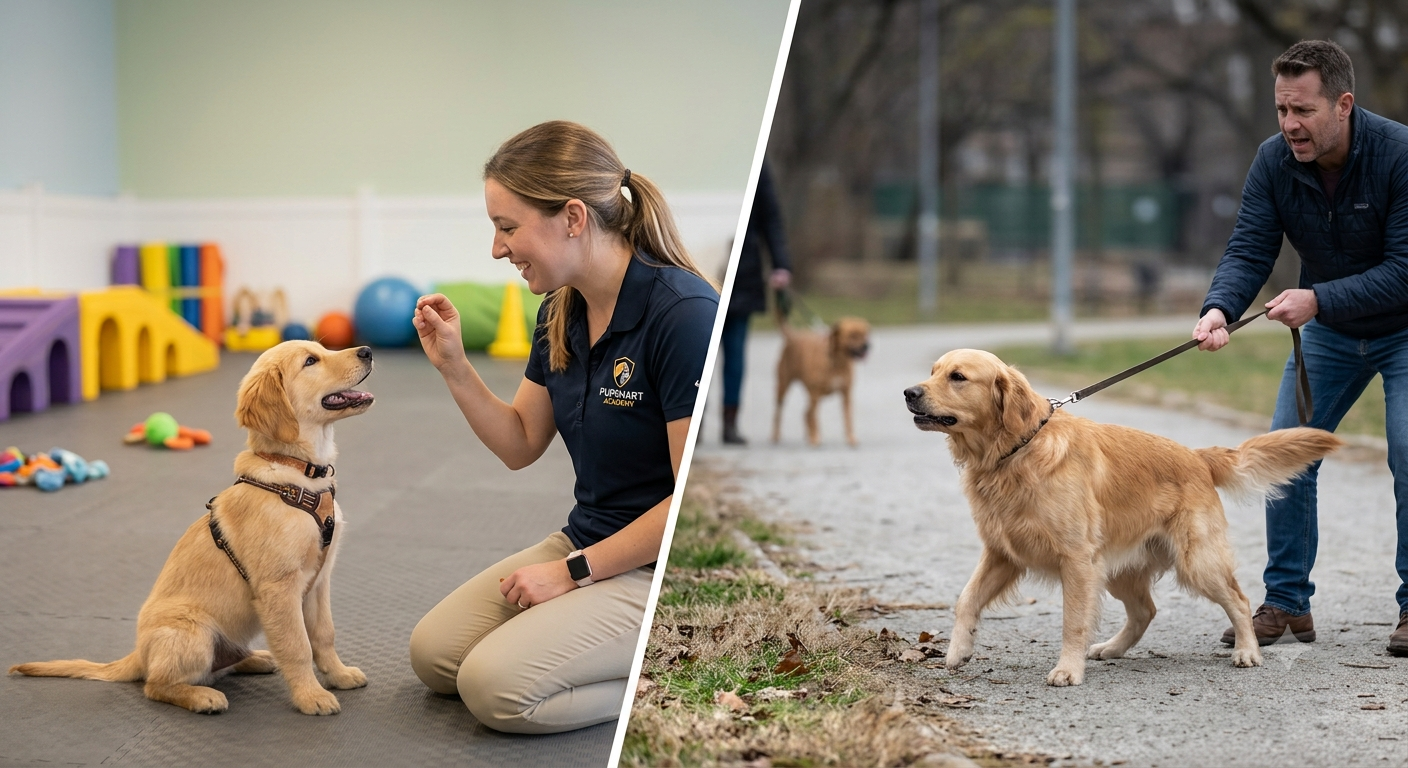
Why Early Puppy Training Matters
Puppyhood is one of the most important periods for establishing habits, communication patterns, and expectations that can influence a dog for years. Behaviors that seem harmless when a puppy is small can become considerably more difficult to manage as the dog grows stronger, more confident, and more independent. Jumping on people may seem cute when a puppy weighs only a few kilograms, but the same behavior can become frustrating or even dangerous when an adult dog develops significant strength. Likewise, playful nipping, persistent barking, pulling on the leash, counter surfing, and ignoring basic commands can become deeply established if they are repeatedly allowed without appropriate guidance. Early training provides an opportunity to teach puppies what behaviors are appropriate before undesirable habits become part of their everyday routine. For families looking for structured support during this important developmental stage, puppy board and train programs can provide an environment where foundational skills are practiced consistently and intentionally.
Small Behaviors Can Become Established Habits
Dogs learn through repetition, which means behaviors that receive attention or produce a desirable result can become increasingly reliable over time. A puppy that jumps on visitors and receives petting may quickly learn that jumping is an effective way to gain social interaction. A puppy that pulls toward another dog and is allowed to reach that dog may begin associating leash tension with getting what it wants. Even behaviors that owners consider temporary can become habitual when they are practiced repeatedly during the early months of life. As the puppy matures, these habits may become more difficult to change because the dog has had months or years to reinforce them. Addressing these behaviors early can therefore reduce the likelihood that they will develop into more persistent adult dog problems.
What Is Puppy Board and Train?
Puppy board and train is a structured training arrangement in which a puppy stays with professional trainers for a defined period while receiving daily training and guided care. Rather than relying exclusively on occasional lessons, this approach allows training to become part of the puppy's daily routine. Depending on the program, training may address obedience, leash manners, socialization, impulse control, crate routines, place training, recall, appropriate play, and household manners. The structured setting also gives trainers opportunities to observe how a puppy responds to different environments, distractions, people, routines, and expectations. This can make it easier to identify developing behaviors that might otherwise be overlooked during short training sessions. When thoughtfully designed and appropriately managed, a board and train program can provide concentrated exposure to foundational skills during a critical stage of development.
Creating Consistency During a Critical Developmental Period
Consistency is one of the most important principles in effective puppy training because dogs need clear patterns to understand what is expected of them. If jumping is discouraged one day but rewarded with attention the next, a puppy receives mixed information about whether the behavior is acceptable. The same problem can occur when different family members use different commands, boundaries, or responses to the same behavior. A professional training environment provides a consistent framework in which desirable responses can be reinforced repeatedly. This consistency can help puppies recognize that certain expectations remain the same even when distractions or circumstances change. The goal is not simply to teach a puppy a collection of commands, but to establish reliable behavioral patterns that can continue into adulthood.
Teaching Impulse Control Before Problems Escalate
Impulse control is an especially valuable skill for young dogs because puppies naturally have limited ability to regulate excitement and frustration. A puppy may rush toward food, leap at people, grab objects, bark when prevented from reaching something, or become overly excited when another dog appears. Without guidance, these reactions can become increasingly difficult to manage as physical strength and confidence develop. Training can teach puppies to pause, wait, disengage, and respond to their handler instead of immediately acting on an impulse. Skills such as waiting before eating, holding position, remaining calm around distractions, and releasing objects can establish a stronger foundation for future obedience. Developing these habits early can make everyday interactions more predictable and can reduce the likelihood that impulsive behavior becomes a defining characteristic of the adult dog.
Improving Leash Manners From the Beginning
Leash pulling is one of the clearest examples of a small puppy behavior that can become a major adult dog challenge. A young puppy pulling toward smells, people, or other animals may not initially seem difficult to control because the puppy is relatively small. As the dog grows, however, the same habit can place substantial pressure on the leash and make walks physically demanding for the handler. Early leash training can teach the puppy that walking calmly provides opportunities to move forward, explore, and interact with the environment. Trainers can gradually introduce distractions so the puppy learns to maintain attention even when something more exciting is nearby. Establishing these expectations early can make future walks safer, calmer, and more enjoyable for both the dog and the owner.
Addressing Jumping and Mouthing Before Adulthood
Jumping and mouthing are common puppy behaviors, but allowing them to continue without boundaries can create significant challenges later. Puppies often use their mouths to explore their surroundings, initiate play, and interact with people, so owners need to distinguish normal exploration from behaviors that require redirection. Similarly, jumping may begin as an enthusiastic greeting but can become problematic when the dog becomes larger and more powerful. Training can teach alternative behaviors, such as sitting calmly for attention or engaging with an appropriate toy during play. Consistent reinforcement helps the puppy understand that calm behavior is more effective than jumping or excessive mouthing. Teaching these alternatives early can prevent owners from having to address much stronger versions of the same behaviors when the dog reaches adulthood.
Building Better Socialization Skills
Socialization involves much more than simply allowing a puppy to meet as many dogs and people as possible. Healthy socialization involves controlled exposure to different environments, sounds, surfaces, people, animals, handling experiences, and everyday situations while helping the puppy remain comfortable and responsive. Poorly managed exposure can sometimes create fear, overstimulation, or excessive excitement rather than confidence. A structured training environment can provide opportunities for trainers to introduce new experiences at an appropriate pace while observing the puppy's body language and reactions. This can help puppies learn that unfamiliar situations do not automatically require fear, avoidance, or frantic excitement. Positive and carefully managed socialization can therefore contribute to a more adaptable adult dog.
Preventing Attention Seeking From Becoming Disruptive
Puppies quickly discover which behaviors attract attention from humans, and sometimes unwanted behaviors are accidentally rewarded. Barking, pawing, jumping, whining, stealing objects, or nudging people can all become effective attention seeking strategies if owners consistently respond to them. Even telling a puppy to stop can provide interaction that reinforces the behavior in some situations. Training can instead teach puppies that calm behavior, appropriate positioning, and responding to commands are more reliable ways to receive attention. Trainers can also help owners recognize the difference between meeting a puppy's legitimate needs and reinforcing demanding behavior. Establishing healthier patterns early can make household interactions substantially easier as the dog matures.
Helping Puppies Learn How to Settle
An often overlooked component of puppy training is teaching a dog how to relax appropriately. Puppies have substantial energy, but constant activity is not the same thing as healthy engagement. A puppy that never learns how to settle may become increasingly demanding, restless, or destructive when the household becomes quiet. Training can introduce structured periods in which the puppy learns to remain calmly on a designated place, relax in a crate, or stay settled while people move around nearby. These skills can become particularly valuable in homes with visitors, children, work-from-home schedules, or other daily distractions. Teaching relaxation early can help create an adult dog that is capable of switching between activity and calm behavior.
Board and Train Is Not a Substitute for Owner Participation
One important consideration is that puppy board and train should not be viewed as a permanent solution that removes the owner's responsibility for training. A puppy may learn impressive behaviors with a professional trainer, but those behaviors still need to transfer successfully into the home environment. Dogs learn from the consequences and expectations they experience every day, which means owners must understand how to maintain the training after the puppy returns home. Professional trainers can provide guidance on commands, reinforcement, boundaries, routines, and handling techniques that help families continue the work. Follow-up instruction can be especially important because the puppy may behave differently in a familiar home than in a structured training environment. The strongest results usually come when professional training and consistent owner participation work together.
Why Timing Can Make a Difference
There is no single age that is perfect for every puppy because developmental stage, temperament, breed characteristics, previous experiences, and individual behavior all influence training needs. However, early intervention can be valuable because it allows owners to shape behavior before undesirable patterns become deeply established. Waiting until a puppy becomes a strong adolescent or adult dog can mean dealing with greater physical strength, increased independence, and more firmly rehearsed behaviors. Early training does not mean expecting a young puppy to behave like an adult dog, because age-appropriate expectations remain essential. Instead, the objective is to establish communication, boundaries, confidence, and foundational skills that can develop alongside the puppy. A thoughtful training plan can evolve as the dog matures rather than relying on one fixed approach.
Choosing the Right Puppy Board and Train Program
Not every board and train program uses the same methods, structure, or standards, so owners should evaluate a program carefully before making a decision. It is important to understand what behaviors will be addressed, how training is conducted, how puppies are supervised, and what type of communication owners receive during the stay. Owners should also ask how the program handles socialization, rest, exercise, reinforcement, unwanted behavior, and individual temperament differences. A good program should recognize that puppies are still developing emotionally and physically and should avoid unrealistic expectations. Clear communication about what happens during training can help owners understand both the potential benefits and the limitations of the program. The right program should ultimately focus on building reliable skills while supporting the puppy's overall development and ability to function confidently in everyday life.
Bringing Training Into Everyday Life
The real value of early training becomes apparent when skills learned during structured sessions are incorporated into ordinary routines. A puppy should eventually be able to practice calm greetings when guests arrive, loose-leash walking during neighborhood outings, appropriate behavior around food, and reliable responses when distractions are present. Owners can reinforce training during short everyday interactions rather than treating obedience as something that only happens during formal sessions. Repetition in different environments helps puppies understand that expectations apply beyond the training facility. This also gives owners an opportunity to identify areas that may need additional work before they become larger challenges. Consistent reinforcement throughout puppyhood can create a strong behavioral foundation that continues to evolve as the dog grows.
When Early Training Can Make a Lasting Difference
Puppy board and train can be particularly useful when a family wants professional guidance during the early stages of a dog's development. It can provide structured practice for foundational behaviors while giving trainers an opportunity to identify habits that could become problematic if left unaddressed. The approach can also help families understand how communication, consistency, reinforcement, and environmental management influence puppy behavior. At the same time, successful training depends on transferring those lessons into the dog's everyday life after the program ends. When professional instruction is combined with responsible ownership and consistent follow-through, early training can help shape a more manageable and responsive companion. The objective is not to create a perfectly obedient puppy overnight, but to establish habits and communication skills that can support healthy behavior throughout the dog's life.
Building the Foundation for the Adult Dog
The behaviors a puppy practices repeatedly can influence the habits that emerge during adolescence and adulthood, which makes early guidance especially valuable. Small issues such as jumping, pulling, excessive barking, mouthing, poor impulse control, or difficulty settling can become considerably more challenging when they are reinforced over months or years. Addressing those behaviors while a puppy is still developing can give owners an opportunity to redirect them before they become firmly established. A structured board and train program can provide concentrated training, professional observation, and repeated practice that may be difficult for some families to achieve on their own. At Hazard K9, we focus on helping dogs develop practical skills that can be carried from structured training into real-world situations and everyday family life. With appropriate expectations, consistent reinforcement, and continued owner involvement, early puppy training can become an important investment in the behavior, confidence, and relationship you want with your adult dog.
